
NeuroReach: feasibility measures and data model
first things to track: setup time, comfort, instructions making sense, abandoned sessions. Save difficulty + normalization alongside scores or future me gets a graph of ???
First evaluation goal: setup feasibility, instruction comprehension, comfort, usability and engagement. Session completion or a playable game is not evidence of improved clinical recovery.
Specification schema: Session links a patient, date, mode, duration and clinician; CalibrationRun stores accuracy and model/filter paths; Trial stores cue/timing, validity flag, EEG/kinematic/intent scores and compensation flag. ClinicalAssessment is separate from these game-derived measures. RawCapture links the raw recordings to a session.
Measures to retain: time to usable signal, completion/abandonment, calibration result, artifact fraction, camera availability, selected mode, rest interruptions and subjective feedback. These are a compiled measurement checklist, not a claim that all fields were already populated. The engineering roadmap identifies persistence and parts of the clinician workflow as pending.
Reference: engineering specification §§11, 13, 15. Its proposed bench tests, usability pilot and later clinical pilot are separate stages; preserve their status.
Review question: can every displayed metric be traced to a raw input, processing version and known validity rule? An improvement in the adaptive game score can also reflect changed normalization/difficulty, so retain those settings alongside trends.
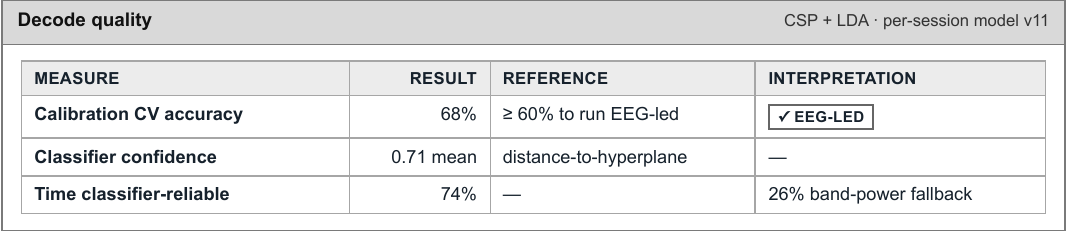
Sample report: calibration and classifier confidence.
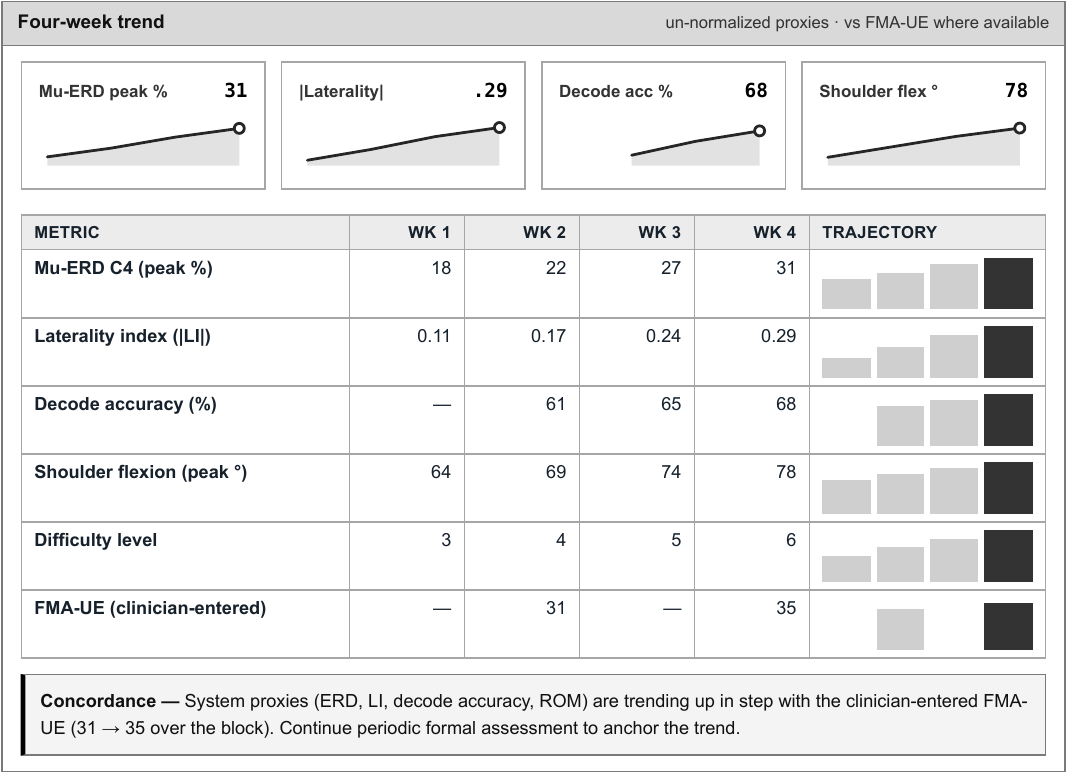
Sample report: game metrics and clinical-assessment fields.
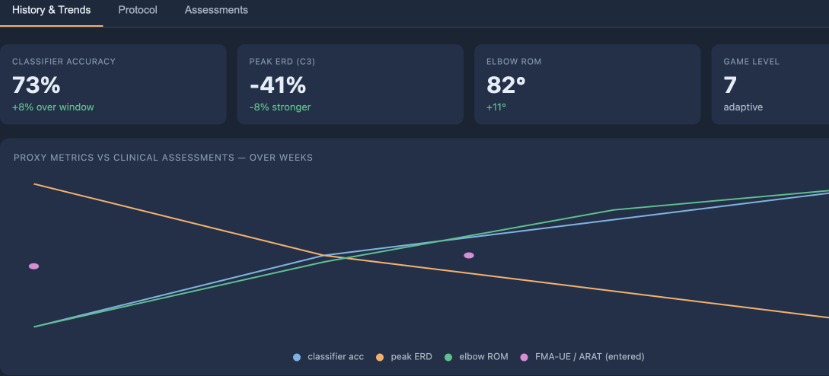
Clinician-console demo history and trends.