NeuroReach: prototype-to-pilot boundary
rehab game work + support groups + a few test users over the summer. Clinic access still slow; keep track of what was actually running in each session, live EEG vs mock vs camera stub
recorded summer activity: adapting the EEG-control project into a rehab game, attending support groups, working with a few test users and contacting clinics. The September update reports slow clinic access; it does not identify a completed formal clinical pilot or outcome dataset.
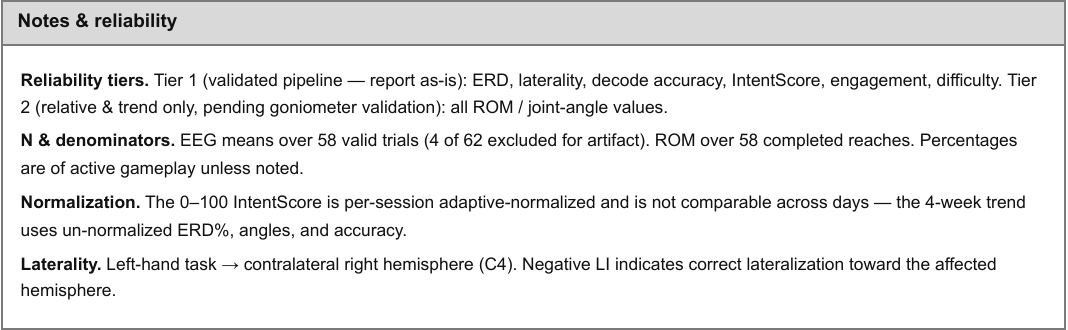
Sample report: normalization and reliability notes.
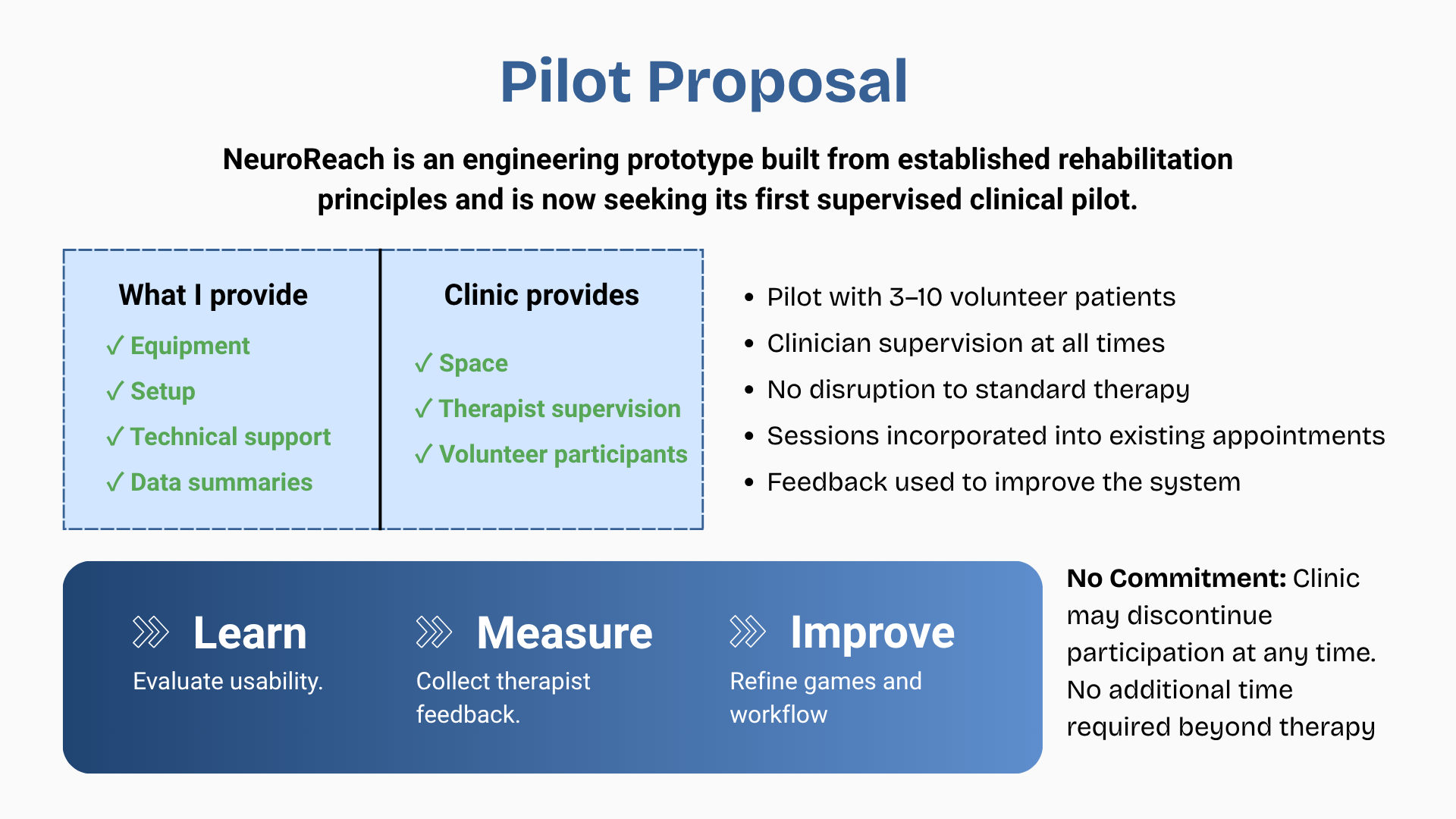
Proposed supervised pilot scope and responsibilities.
supporting document status: the July newsletter seeks input and future pilot opportunities. The clinic-facing PDF proposes 3–10 volunteers under supervision. Treat those numbers as proposed scope, not enrolled participants.
technical dependencies to verify before describing a pilot-ready system: live camera transport/kinematic scoring, persistent session data, controls for pause/rest/end/mode change, packaging and measured end-to-end latency. These are specifically pending or next-stage items in the engineering roadmap even though earlier summary sections describe the target system in present tense.
reference question: what was actually running during each test-user session—mock EEG, live EEG, camera input or a stub? Attach software version, mode and feedback record to each session rather than combining all prototype interactions into one clinical-performance claim.