NeuroReach: headset throughput and session scheduling
one headset = one person, setup included. Add calibration + rest + cleaning before trusting the 30–40 min slot... the timing adds up fast
- constraint in the July deployment plan: one EEG headset permits one EEG user at a time. The planning estimate allows 4–8 minutes for fitting/contact checking before gameplay. These are capacity assumptions, not measured session statistics.
- workflow units: count setup, calibration, active play, rest, cleaning and transition separately. The engineering specification sketches 5–8 minutes for setup/contact checks, 3–10 minutes for calibration, two 8–10-minute gameplay blocks, 2–3 minutes of rest, 2 minutes for summary and 3–5 minutes to doff/clean. Adding the stated extremes gives a wider range than the advertised 30–40-minute slot; the actual schedule needs measurement and a clear definition of what is included.
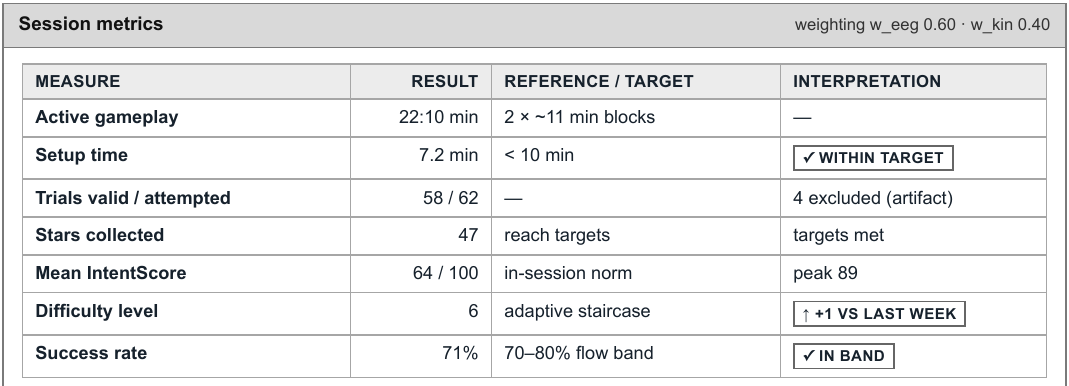
Sample report: session setup, gameplay and trial totals.
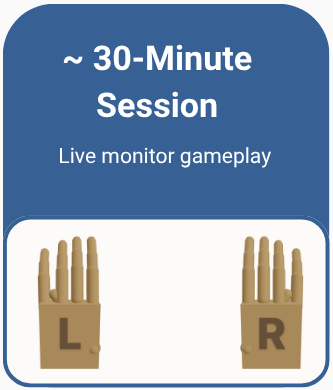
Planned session timing and left/right hand cues.
- planning option: reserve EEG-led sessions for settings where headset setup is justified and use a distinct camera-led engagement mode for larger-group settings. The deployment plan proposes this; it does not prove that the necessary camera path was already delivered. The engineering spec marks real WebRTC camera integration as the next phase.
- review questions: report unique participants separately from visits and minutes of use; include setup failure and cleaning in throughput. Validate the actual operating mode before accepting a capacity forecast.