NeuroReach: v1-to-v2 architecture map
Unity → React/TS for the patient side, Electron console + Python signal engine. Keeping the folder map here; check the pending list before assuming a whole path is hooked up
architecture revision in the engineering specification: replace the Unity patient client with React/TypeScript/Vite; wrap the clinician UI in Electron; keep Python as a packaged signal-engine sidecar. The camera moves to the patient device, while processing remains on the clinic machine. The specification describes an in-clinic LAN arrangement, not remote internet treatment.
repository navigation: thalis-rehab-game. signal-engine/acquisition/, preprocessing/, features/, calibration/, classifiers/, scoring/, and server/ separate data acquisition from scoring and transport. clinician-console/src/main/lan/ owns the patient-facing LAN layer. patient-web/src/scenes/ owns game scenes; src/scoring|net/ parses/receives the score.
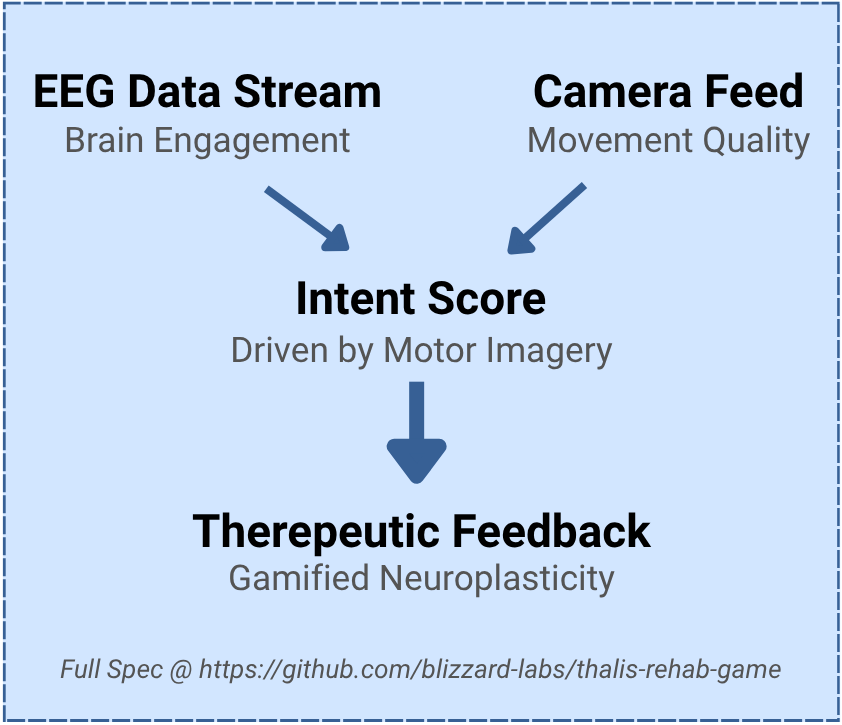
EEG and camera inputs, intent score and game feedback.
process boundary: Electron supervises the sidecar and serves the patient build; Python owns acquisition/DSP/scoring, planned vision ingestion and storage services. The patient receives score/game state and publishes its camera, rather than accessing the clinical database.
what was marked delivered: web game, mock/in-memory console, signal core, WebSocket transport and session-code pairing foundation. what remained next/pending: real remote-camera integration, engine-control/persistence integration, installer hardening and full latency validation.
review question: audit each “current system” sentence against §15's status table before treating a target architecture as working software. No repository checkout or current commit was independently inspected for this note.