MesoNet: temporal spike coding and LIF variants
relative spike timing rather than just rate. keep encoder / neuron / learning rule separate while messing w/ the time constants
study direction: use relative spike timing rather than only average rate. The notebook adapts the LIF baseline by changing membrane time constants and synaptic updates, with input encoding, neuron dynamics and learning mechanisms kept modular.
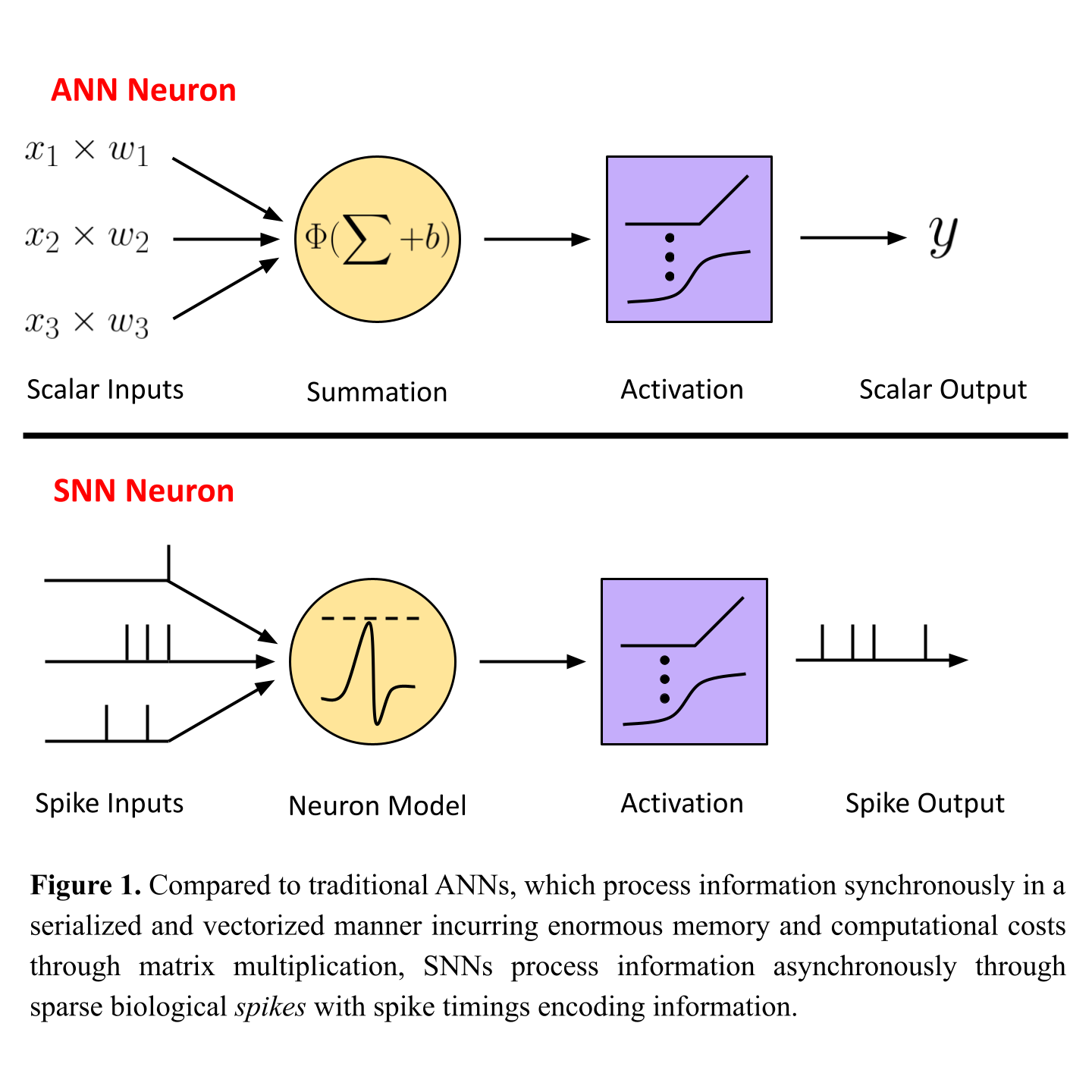
ANN and SNN neuron schematic
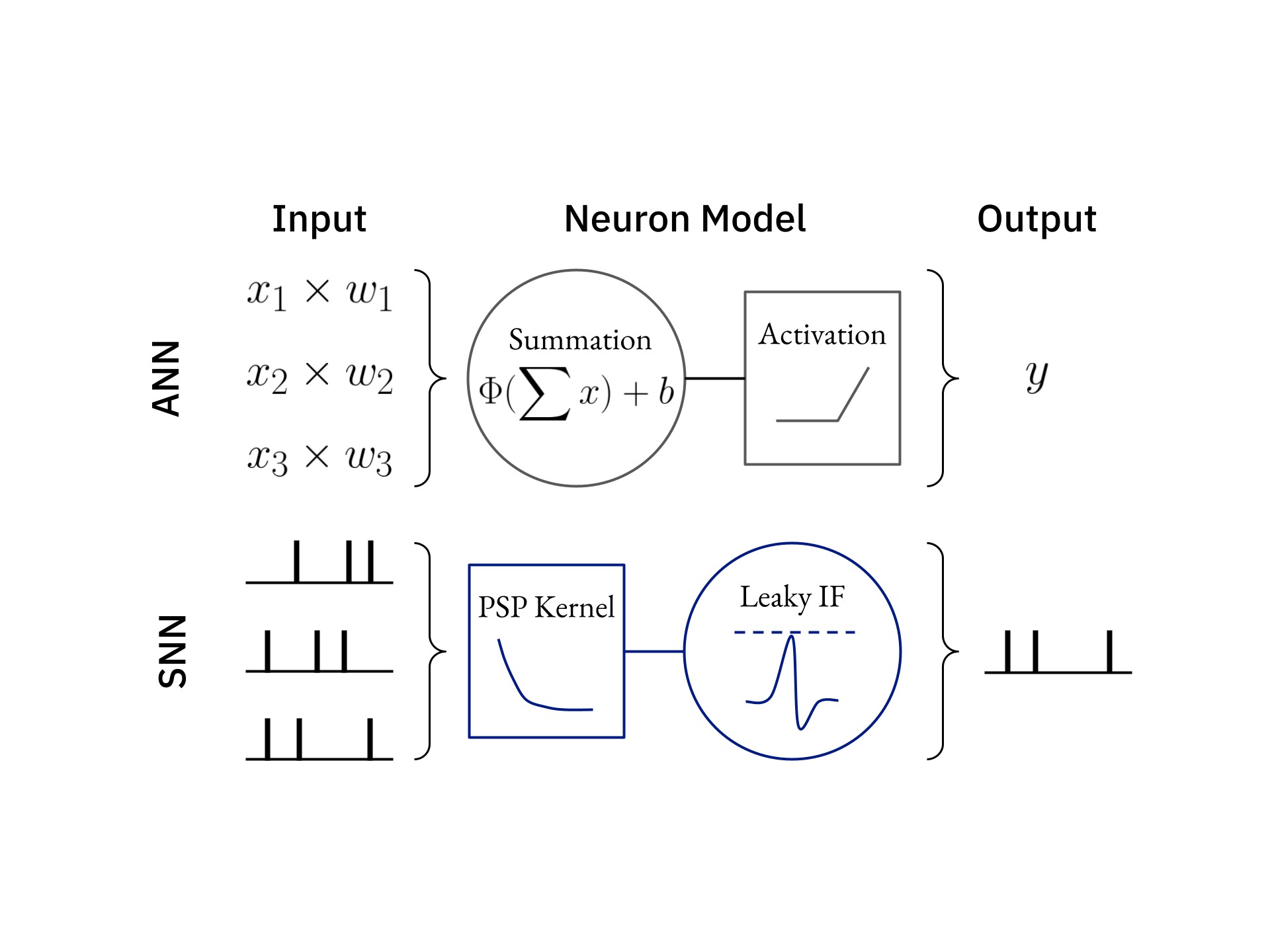
ANN and SNN model comparison
recorded qualitative observation: some adaptive components improved the apparent stability/synchronization of spikes, at additional computational cost. No numerical stability or accuracy comparison is attached to this entry.
architecture notes: retain excitatory and inhibitory pathways and evaluate whether lateral inhibition still produces useful competition under the new timing scheme.
questions from the research direction: how fine must timing resolution be to preserve a useful distinction? Does extra temporal precision change representation quality enough to justify simulation cost? Compare fixed versus adaptive dynamics before attributing an effect to the encoding itself.
References saved in this journal section
- https://www.ecva.net/papers/eccv_2020/papers_ECCV/papers/123550392.pdf
- https://github.com/GenevieveF/Diehl-Cook_2015_Brian2/blob/main/Diehl%26Cook_spiking_MNIST_B2.py
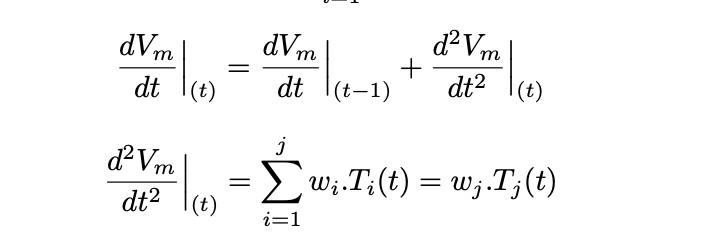
Neuron differential equations
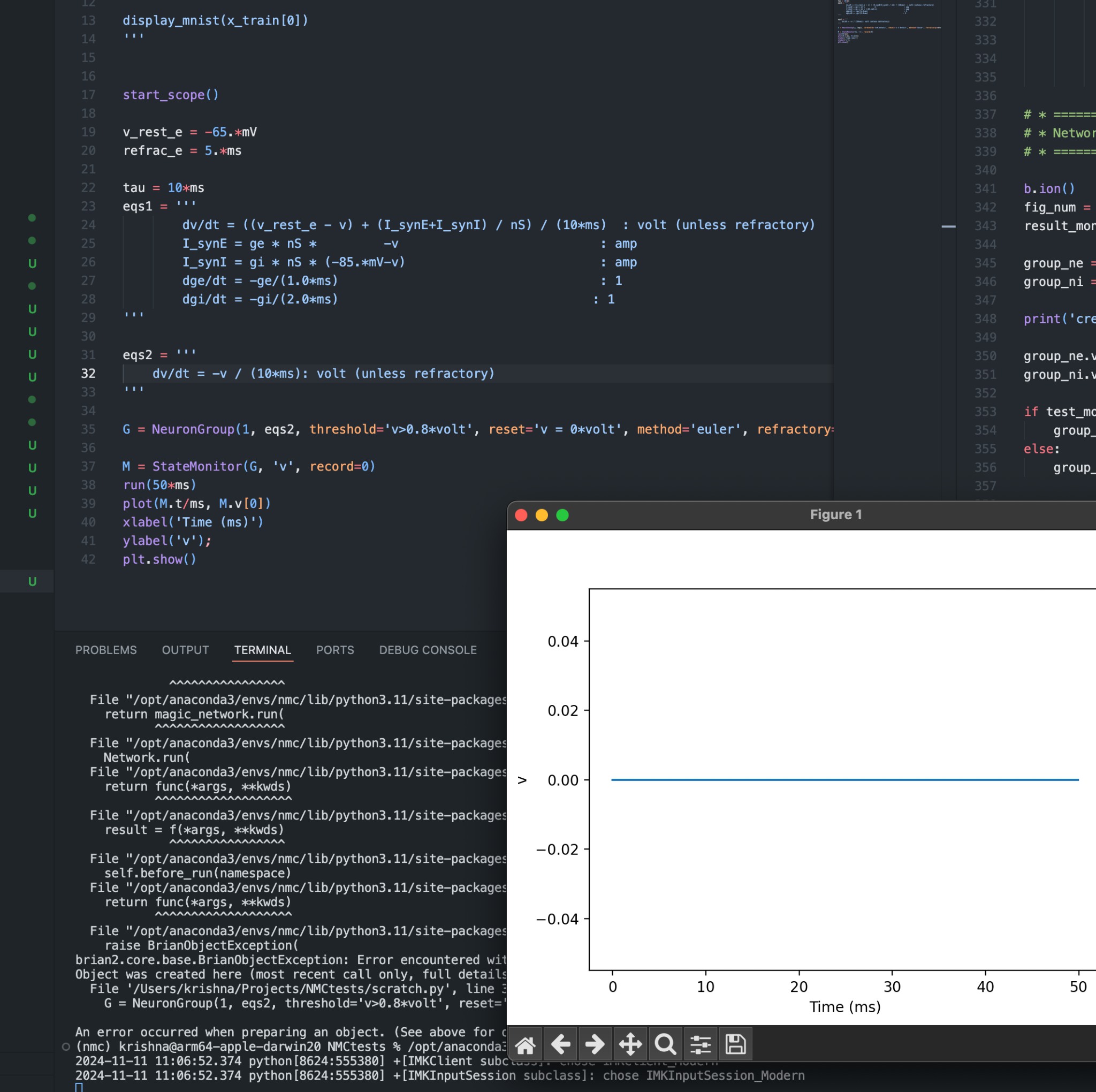
Neuron-response experiment
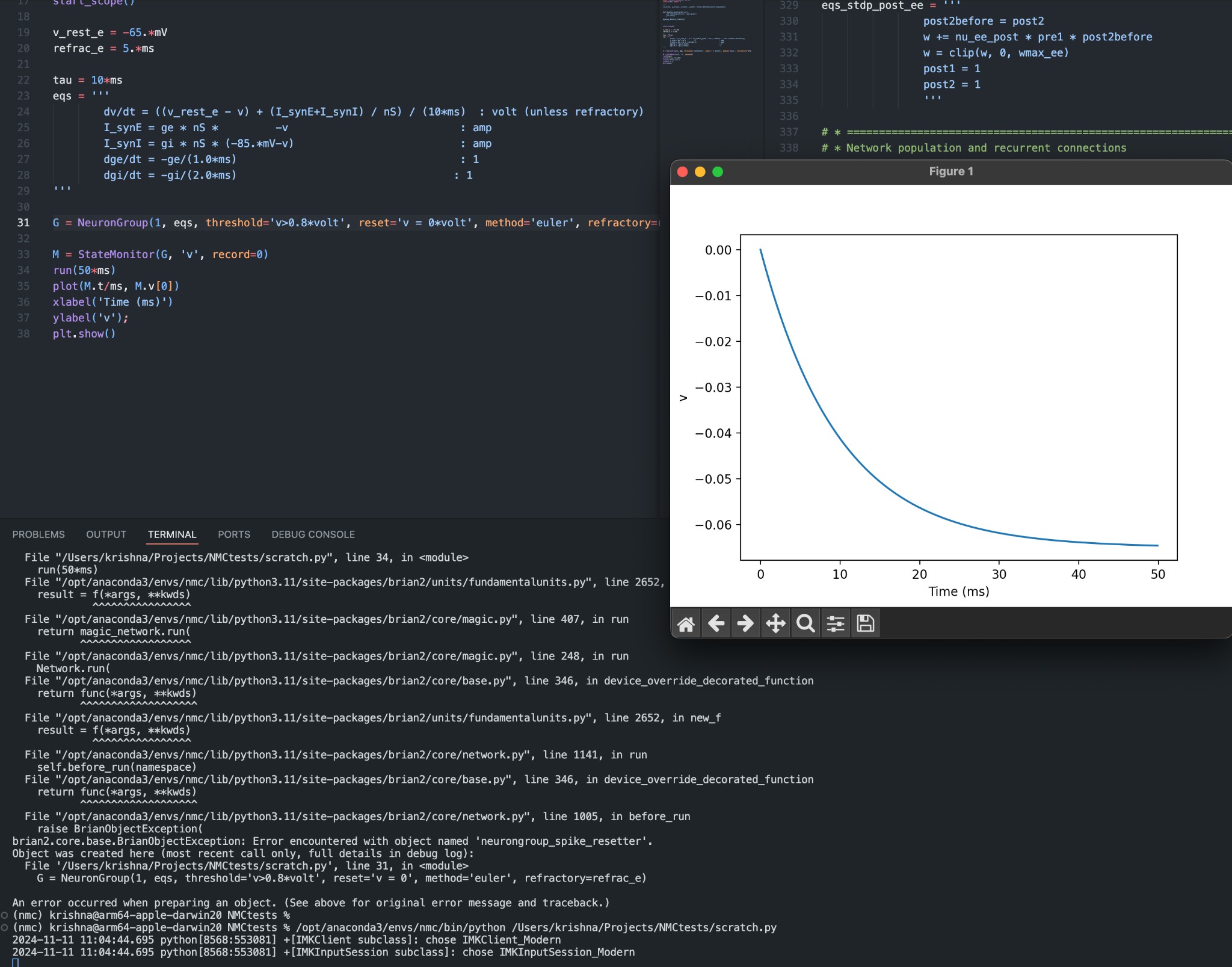
Neuron-response decay