MesoNet: temporal credit and architecture analogies
local update, distant consequence... still the interesting problem. MAMBA / recurrence / gating ideas to come back to; also eligibility traces, could the synapse hang onto a fading event until credit arrives?
question: how can a local timing-dependent synaptic update account for a signal that matters much later or farther away in the network?
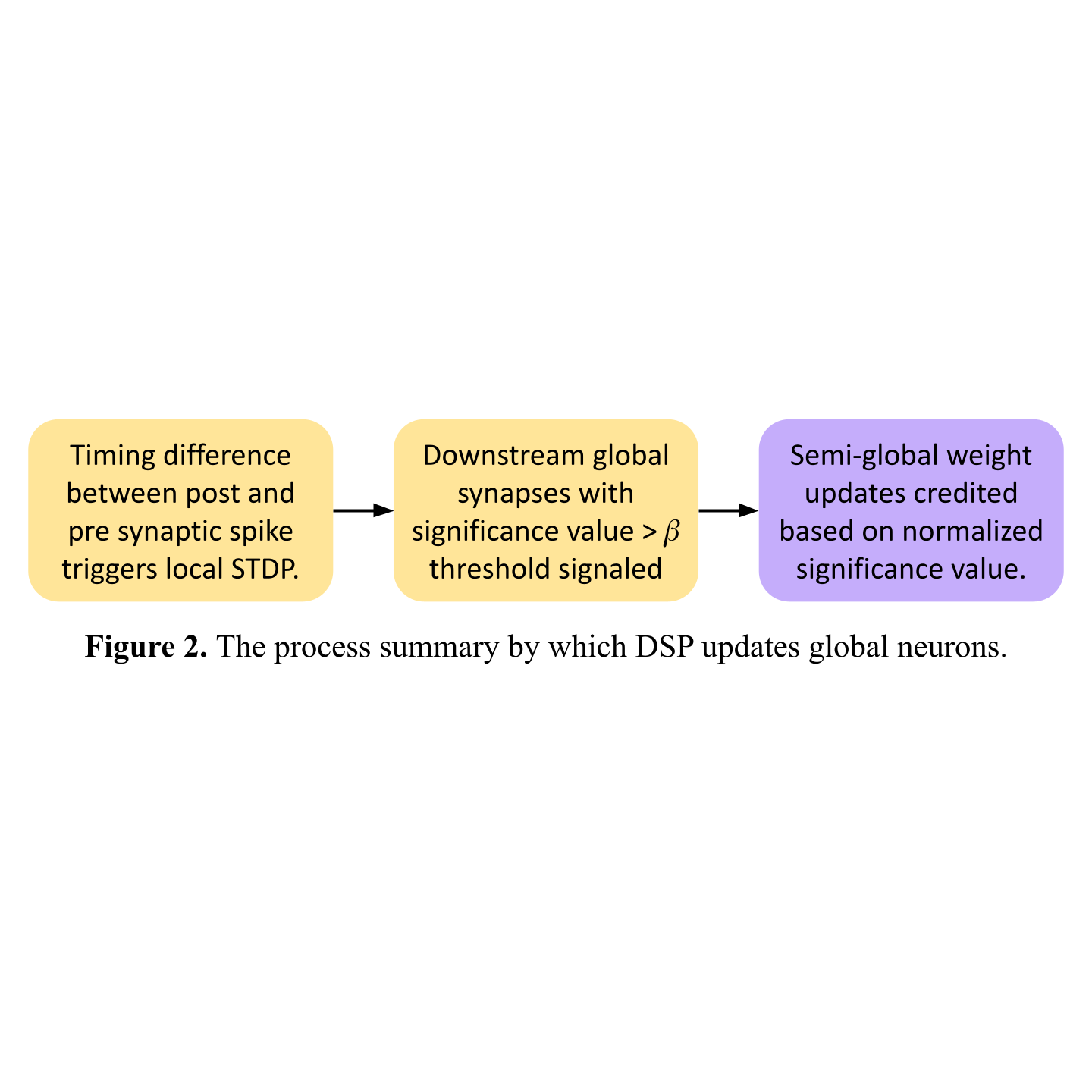
Local STDP and distributed updates
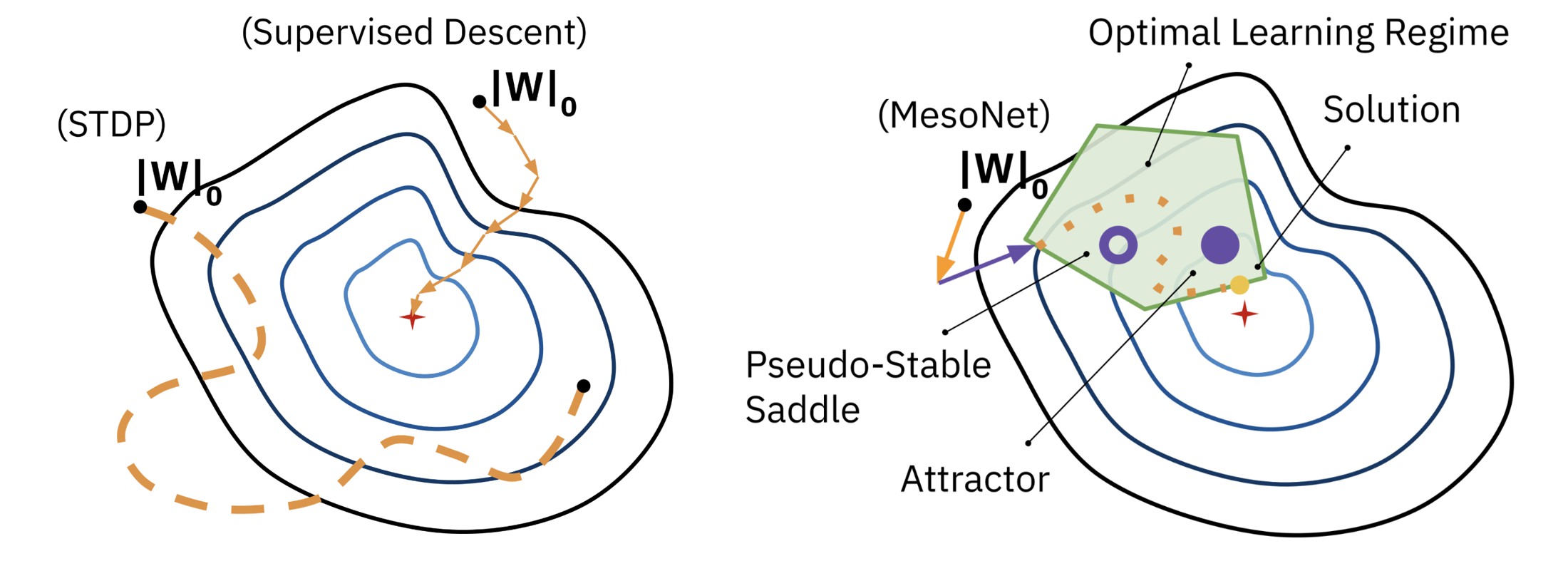
Conceptual learning regimes
reading directions in the notes: state-space models/MAMBA for long-range dependencies; CNNs for spatial filtering; recurrent networks and gating for memory; Hodgkin–Huxley versus integrate-and-fire dynamics for the simulation cost/biological-detail tradeoff.
design separation: an analogy to an ANN architecture does not specify a spiking learning rule. Write down the state being remembered, the update timescale, and the information available locally to a synapse before calling a mechanism biologically local.
review questions: is a failure caused by input encoding, insufficient memory, or the assignment of learning updates? Hold two of those pieces fixed while testing the third. The entry identifies the problem; it does not contain a completed credit-assignment solution.
References saved in this journal section
- https://www.analyticsvidhya.com/blog/2020/08/top-4-pre-trained-models-for-image-classification-with-python-code/
- https://image-net.org/download
- https://newsletter.maartengrootendorst.com/p/a-visual-guide-to-mamba-and-state
- https://www.geeksforgeeks.org/mathematical-understanding-of-rnn-and-its-variants/
- https://www.frontiersin.org/journals/neuroscience/articles/10.3389/fnins.2022.1079357/full
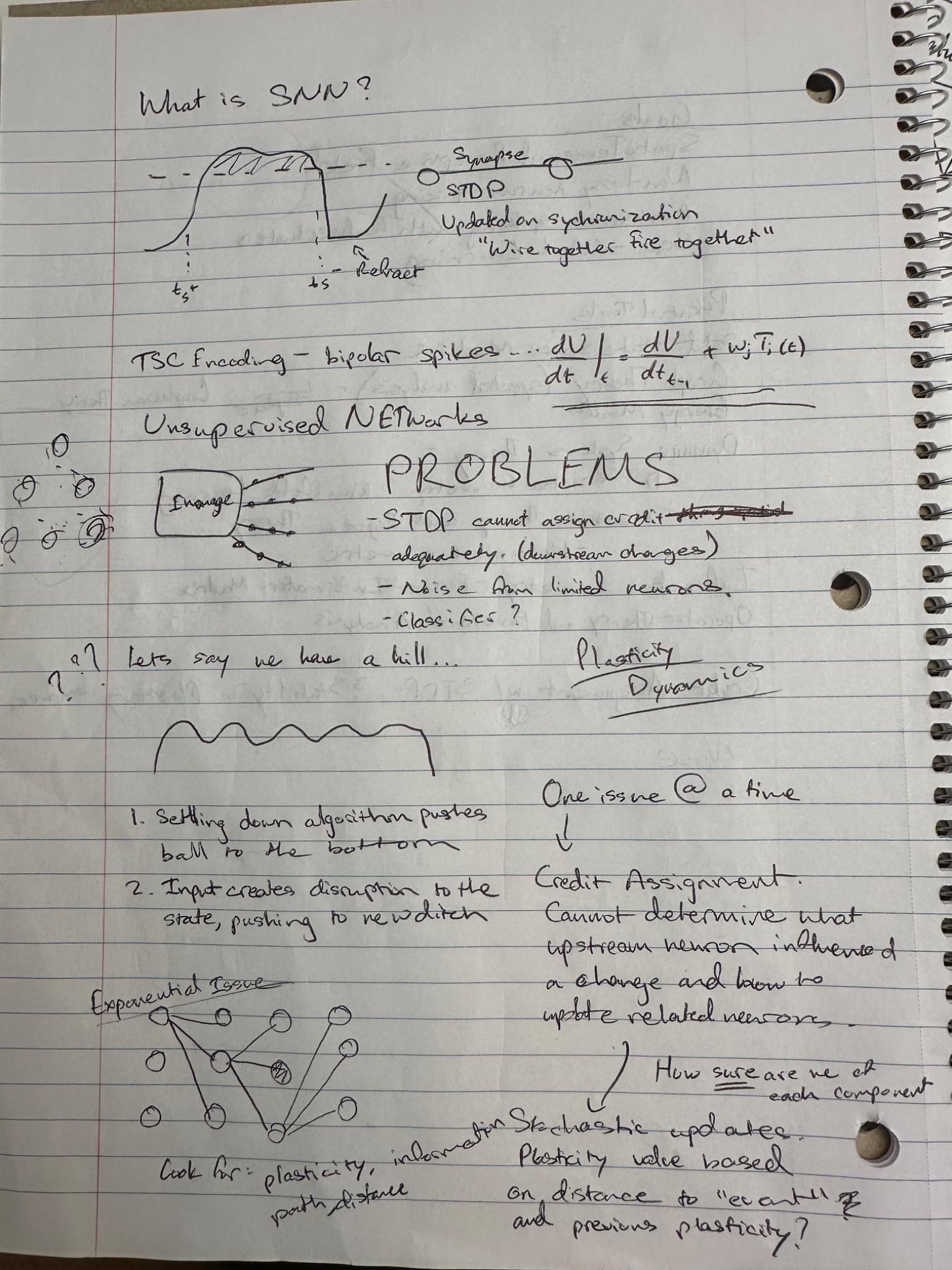
Temporal-credit notebook page
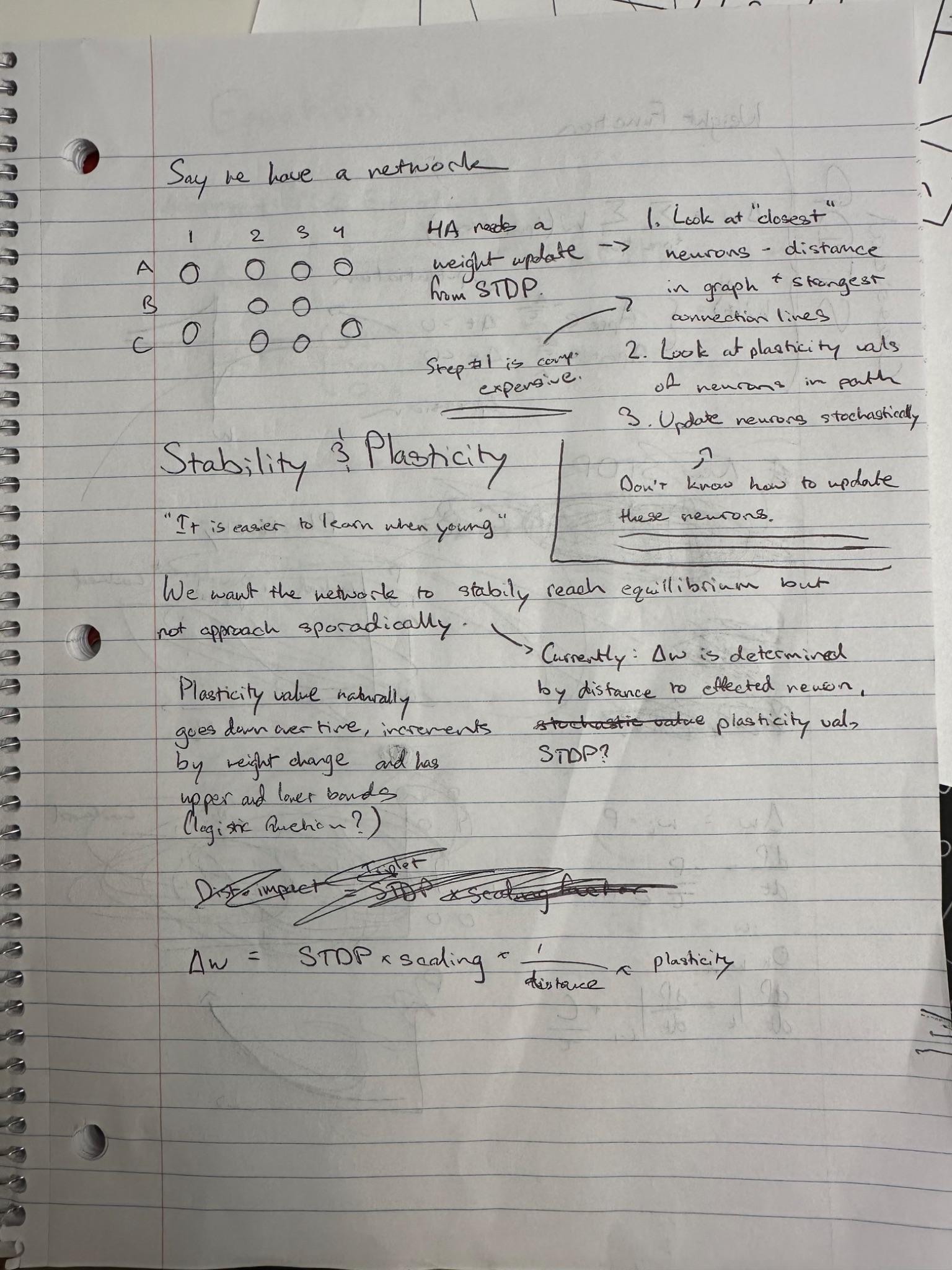
Plasticity notebook page