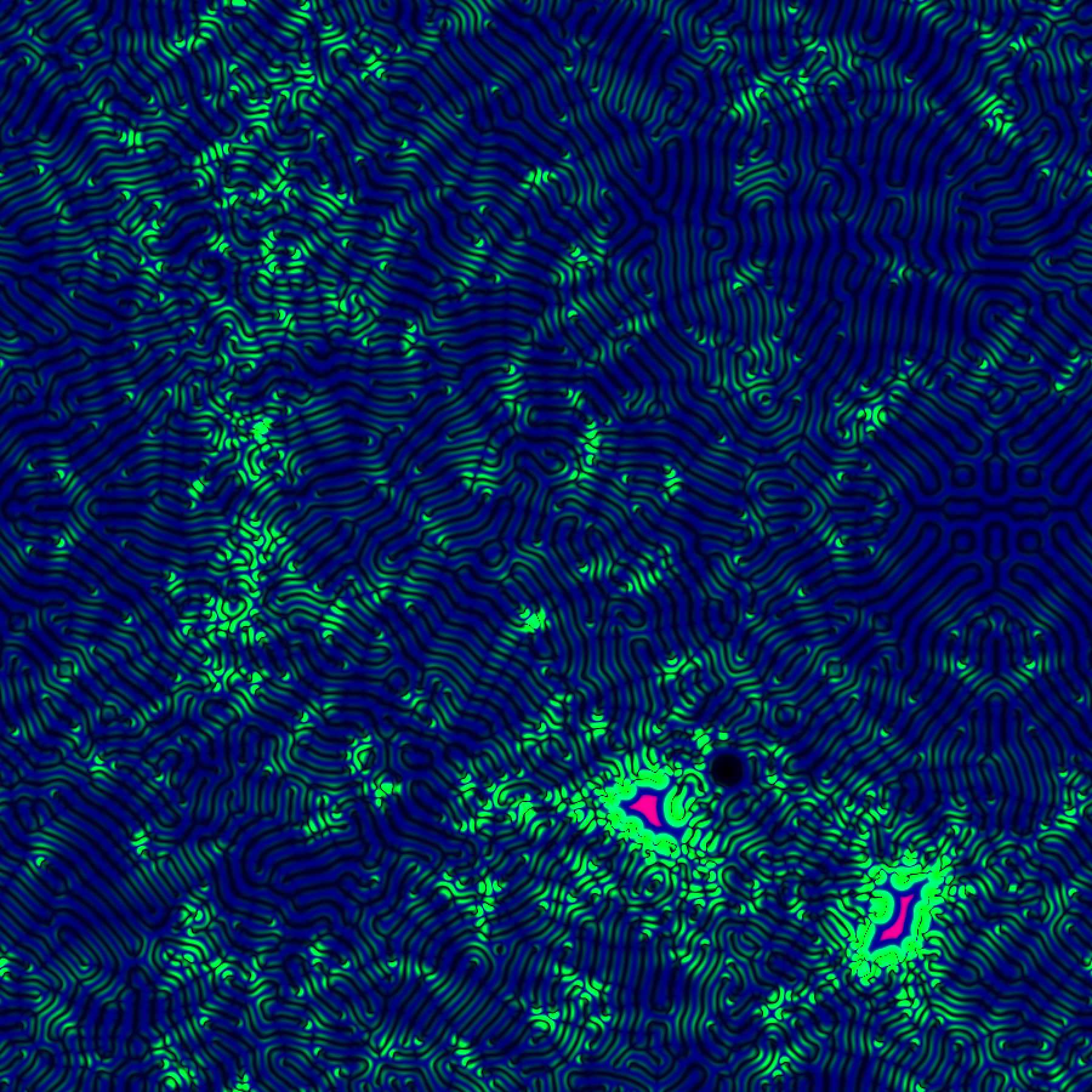
MesoNet: datasets and spike encoding
MNIST vs actual event data—encoding is part of the experiment. inspect the spike trains! also if every spike shifts by the same amount, does the representation change or only its timing?
Candidates: MNIST for a simple static-image baseline; DVS128 Gesture for event-based input; Spiking Heidelberg Dataset for temporal data. The conversion procedure is part of the experiment for a static dataset and must be recorded alongside the network.
Draft preprocessing: normalize input, apply thresholds where relevant, then generate stochastic or timing-based spike events. For temporal spike coding, map intensity into spike timing and examine inter-spike intervals and thresholds.
Tradeoff: more complex input can test temporal/spatial representation, but encoding and preprocessing may dominate runtime or discard useful information before the SNN receives it.
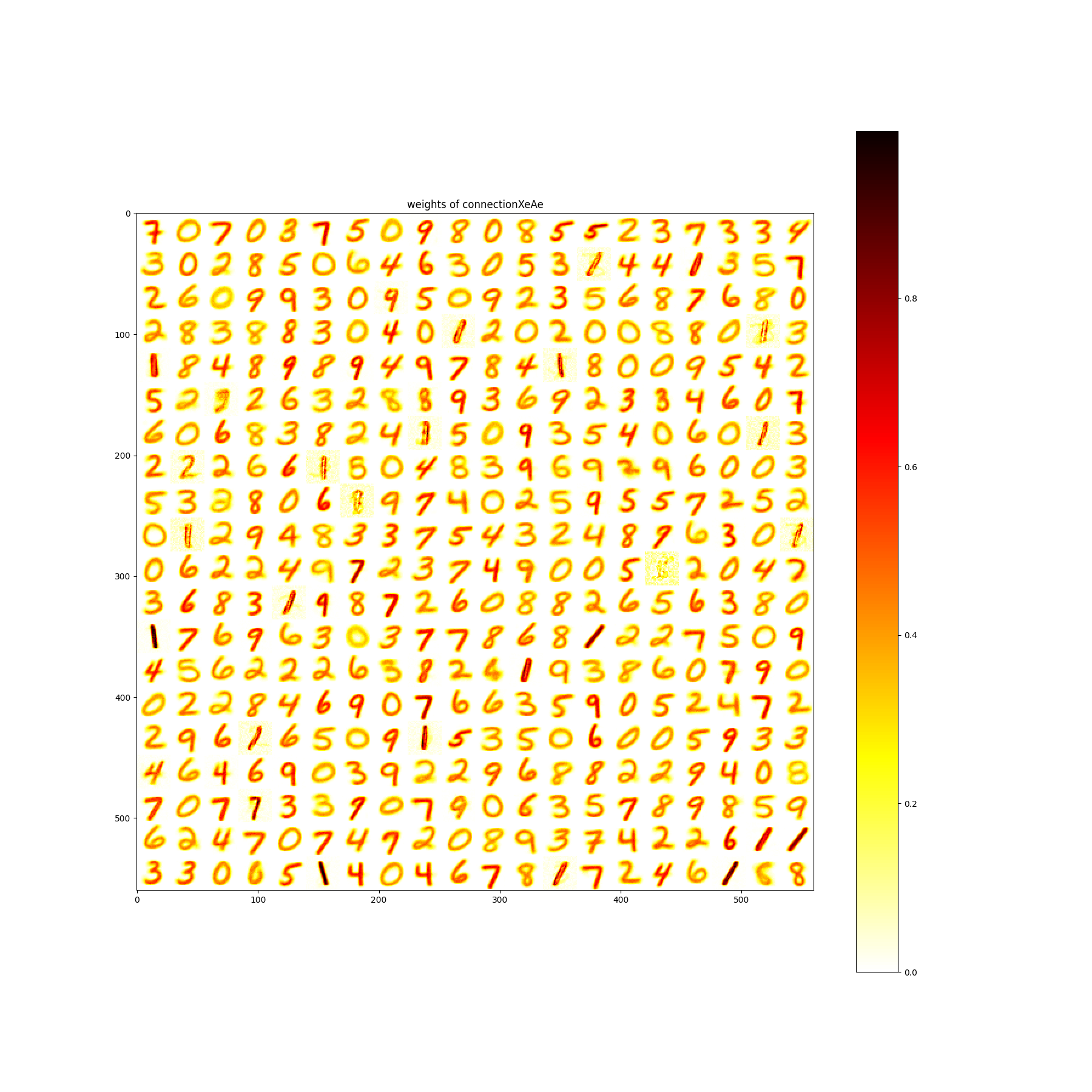
XeAe receptive-field mosaic
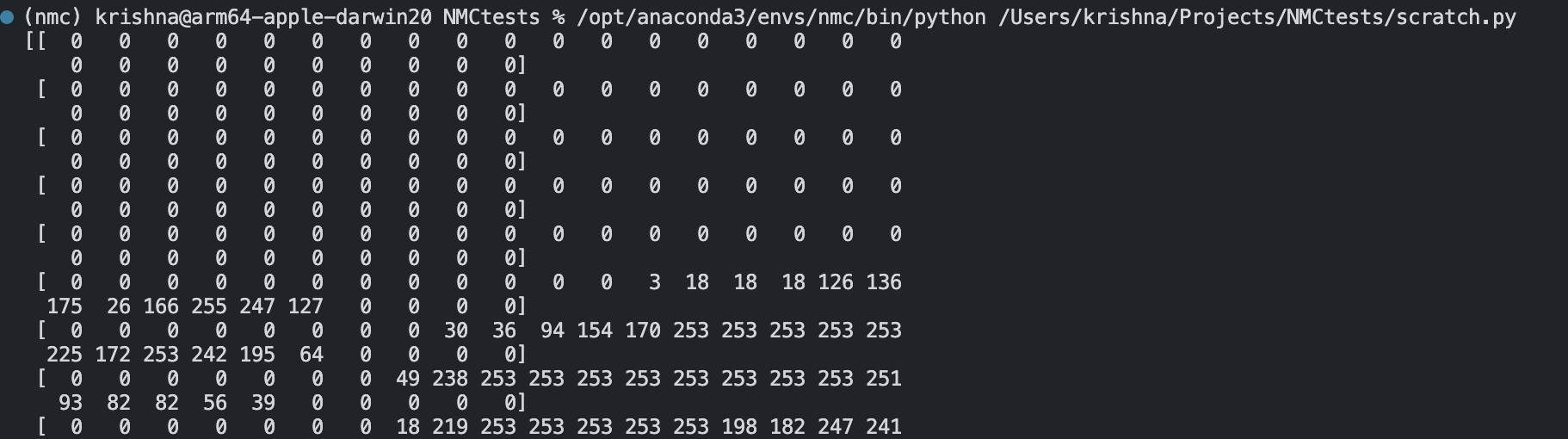
Encoding debug output
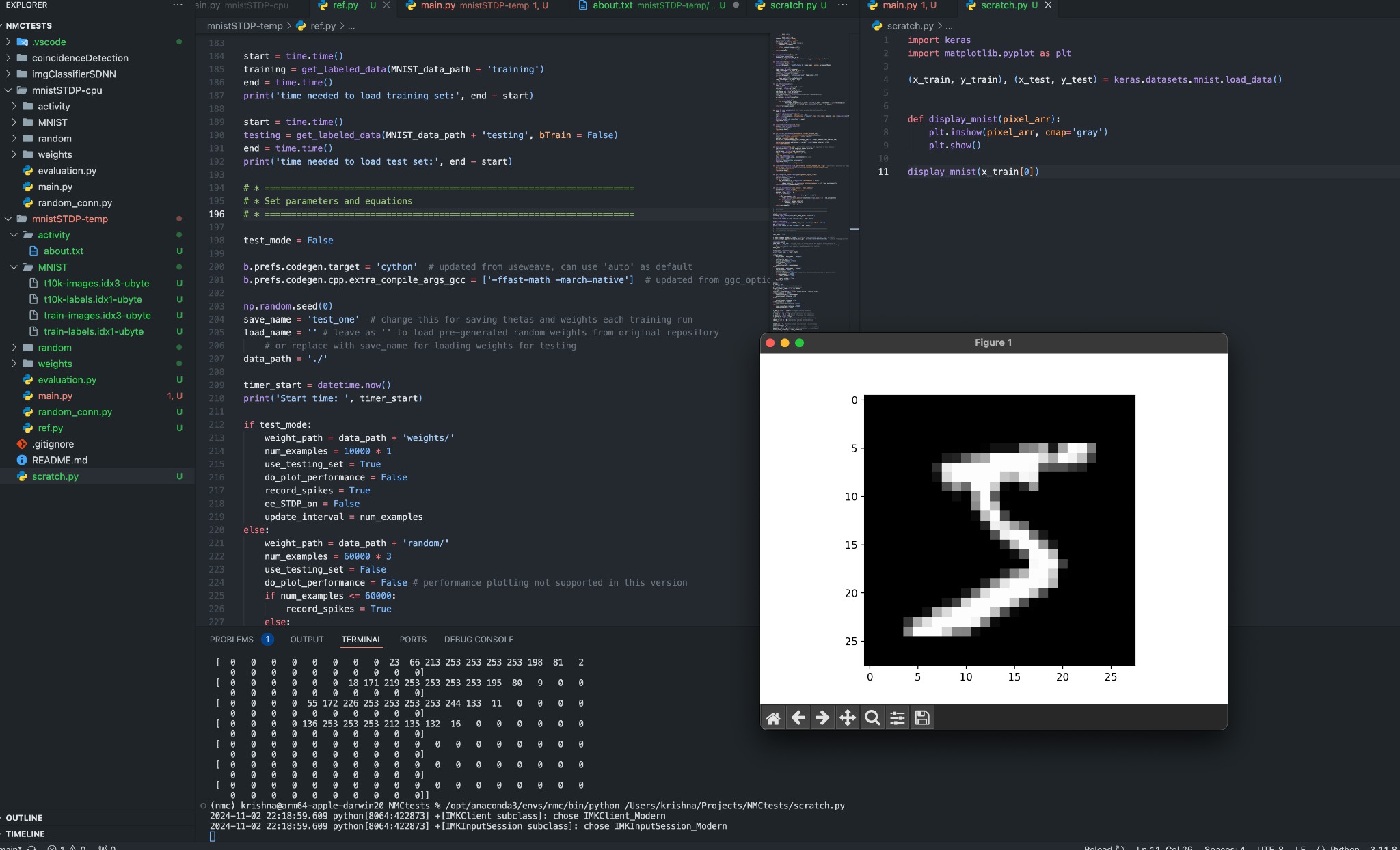
Input image and temporal encoder
Review questions: are train/test splits applied before fitting normalization? Are labels used only in evaluation/readout? Compare encoders with the same sample set and distinguish encoder-generated timing from timing inherent in the dataset.
References saved in this journal section
- https://github.com/blizzard-labs/NMCtests
- https://www.kaggle.com/code/dlarionov/dvs128gesture-snntorch/notebook
- https://zenkelab.org/resources/spiking-heidelberg-datasets-shd/
- https://stats.stackexchange.com/questions/79028/performance-metrics-to-evaluate-unsupervised-learning
- https://scikit-learn.org/stable/modules/clustering.html#clustering-performance-evaluation