MesoNet: CPU runtime observations
11 hours for ~8%... yeah this needs looking at. save neuron count, dt, presentation time + backend with the runtime, otherwise the numbers aren't much use
- recorded observations: after more than 11 hours the simulation was about 8% complete; a later observation reports about 20% after more than 14 hours. The CPU remained heavily occupied. These are progress observations, not a controlled timing benchmark.
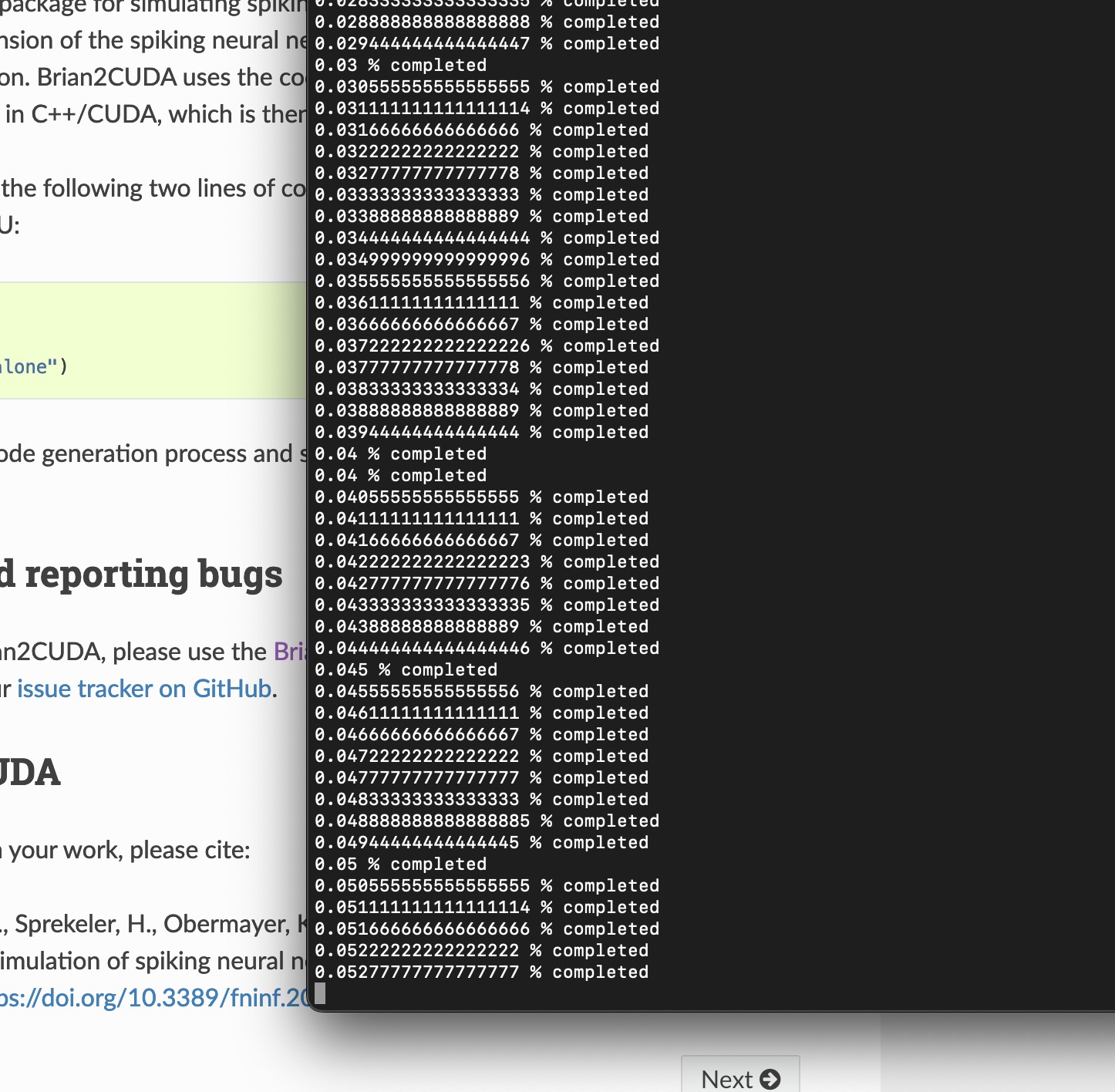
CPU simulation progress
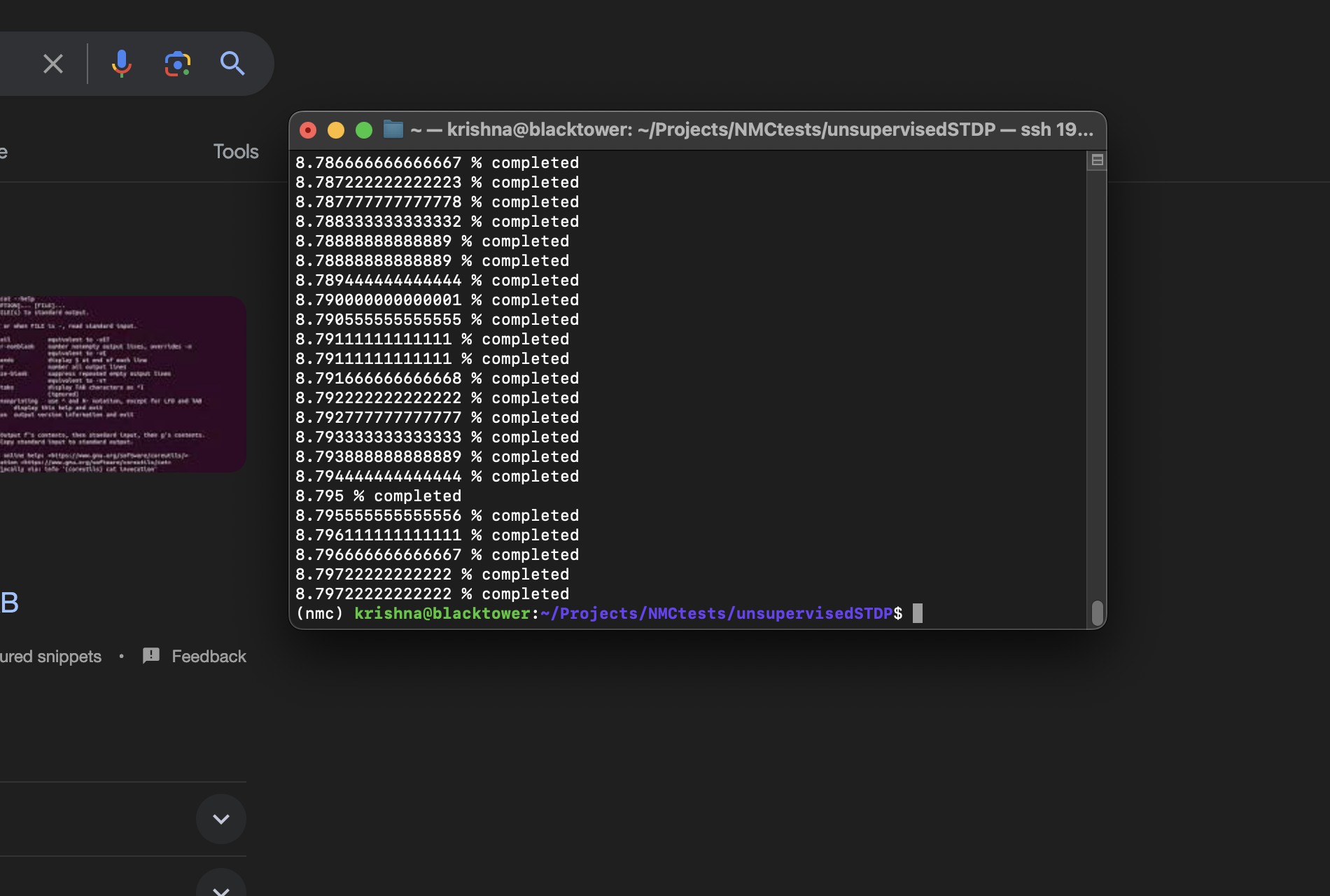
Runtime diagnostics
- what to preserve with the run: dataset size, neuron count, timestep, simulated presentation duration, learning enabled/disabled, simulator backend and machine. The two elapsed-time snapshots should not be used to assume linear throughput or extrapolate a precise completion time.
- next investigation in the notes: GPU acceleration with Brian2CUDA. Keep compilation/setup time separate from simulation execution when measuring the effect of a backend change.
- review questions: is most time spent in simulation, monitoring, Python callbacks or saving arrays? Measure wall-clock cost per fixed number of examples before changing the scientific model to improve speed.
- References saved in this journal section
- https://brian2cuda.readthedocs.io/en/latest/introduction/install.html
- https://brian2cuda.readthedocs.io/en/latest/introduction/install.html#testing-your-installation
- https://brian.discourse.group/t/brian2cuda-testing/923
- https://github.com/blizzard-labs/NMCtests
- https://www.digitalocean.com/community/tutorials/nohup-command-in-linux
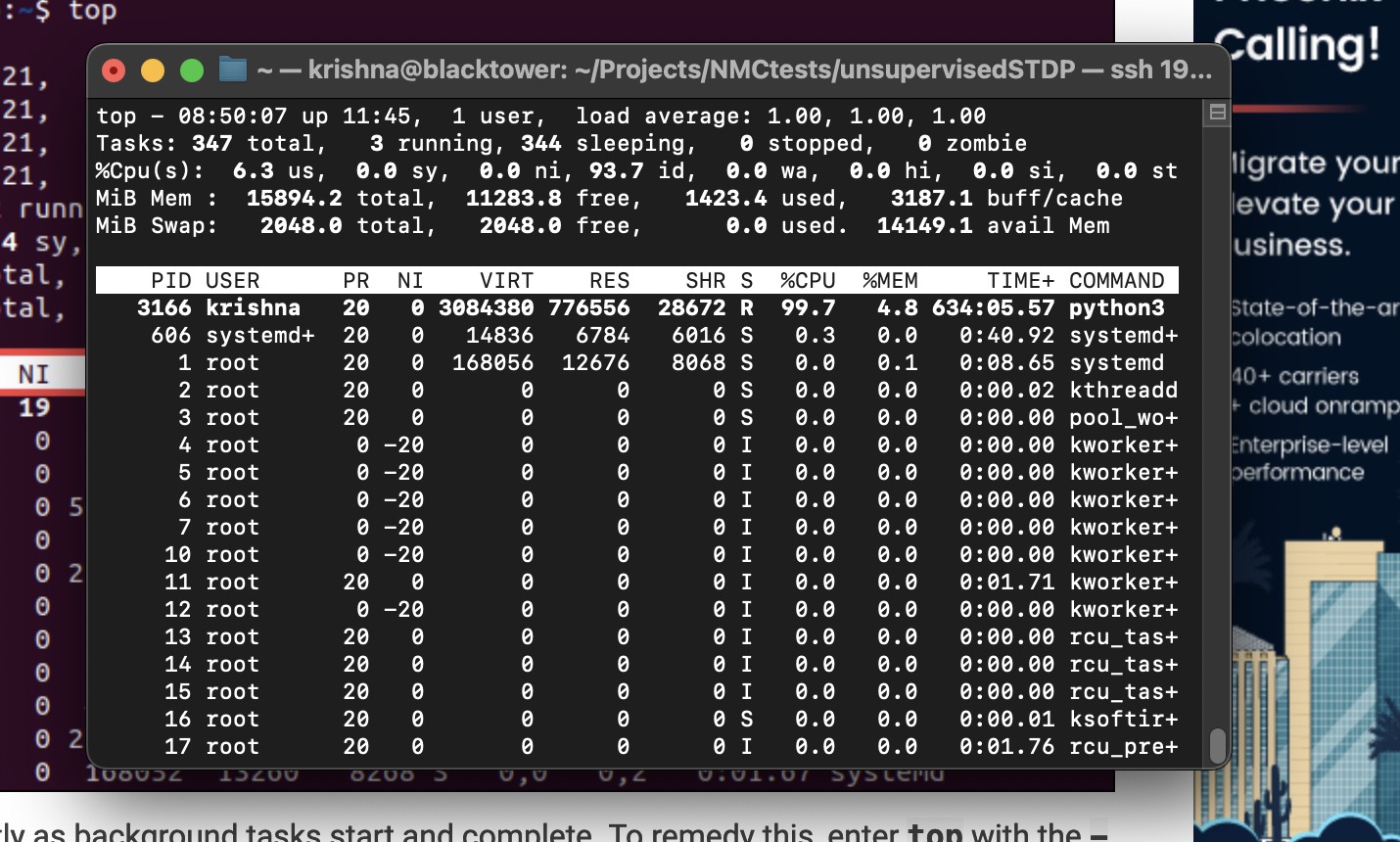
CPU process monitor