MesoNet: TSC input integration
TSC → neuron model, watch the ones that keep firing. indices and times need to stay paired when replacing a sample's spikes
- recorded changes: TSC input encoding connected to the neuron model; spike-time resolution and decay rates adjusted; dynamic refractory behavior and weight-decay ideas explored. The notes report frequent firing in some neurons and slower training/convergence with the more adaptive model.
- aPI pointers:
SpikeGeneratorGroup.set_spikesand Brian2 input handling. Keep neuron indices and spike times together when regenerating an encoded sample; the diary does not provide the final timing parameters here.
- planned tests: start with small datasets, collect firing statistics, examine inhibition balance, and investigate parallelization/acceleration. Changing the integration timestep is a distinct experiment because it can change the temporal code itself.
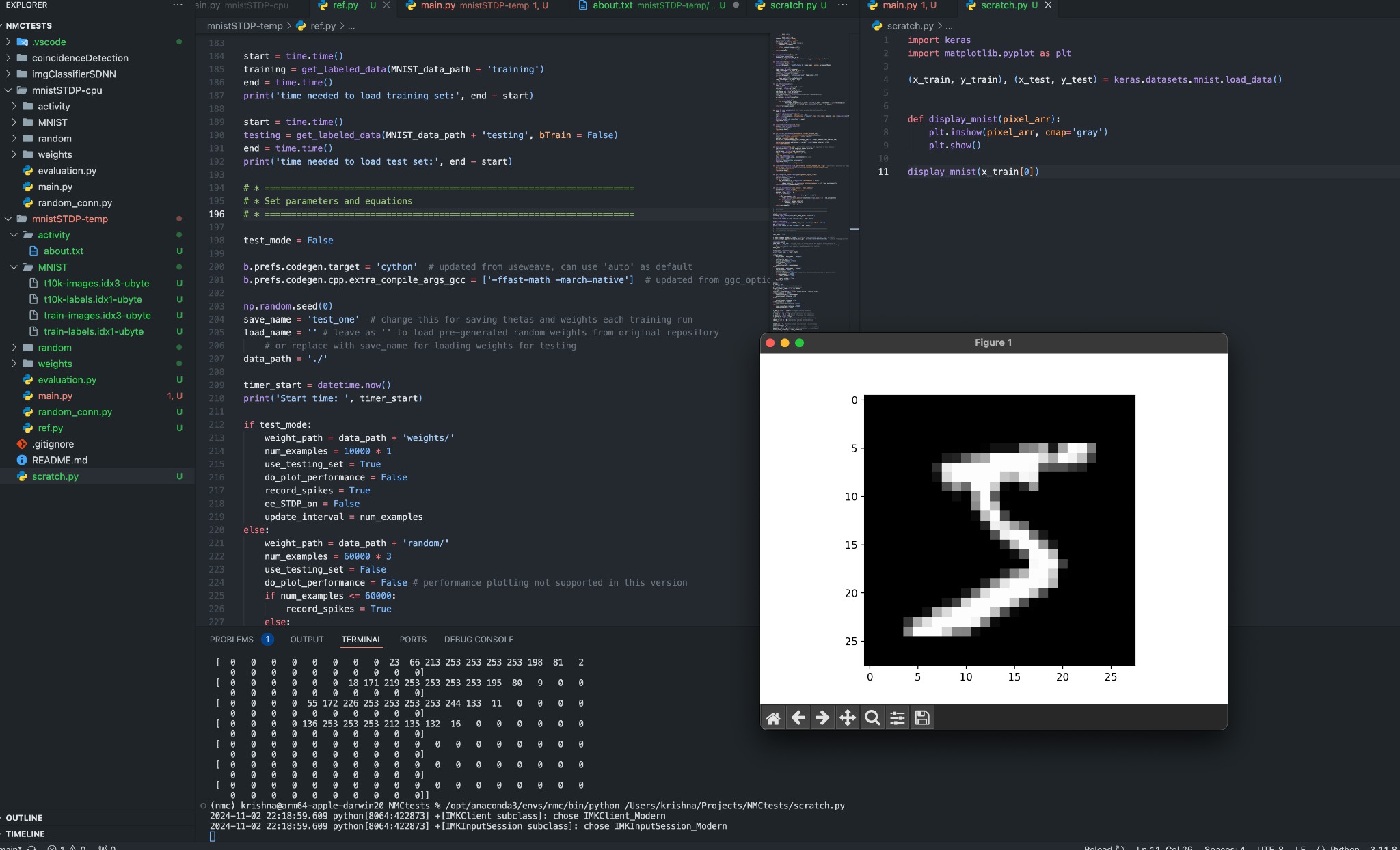
Input image and temporal encoder
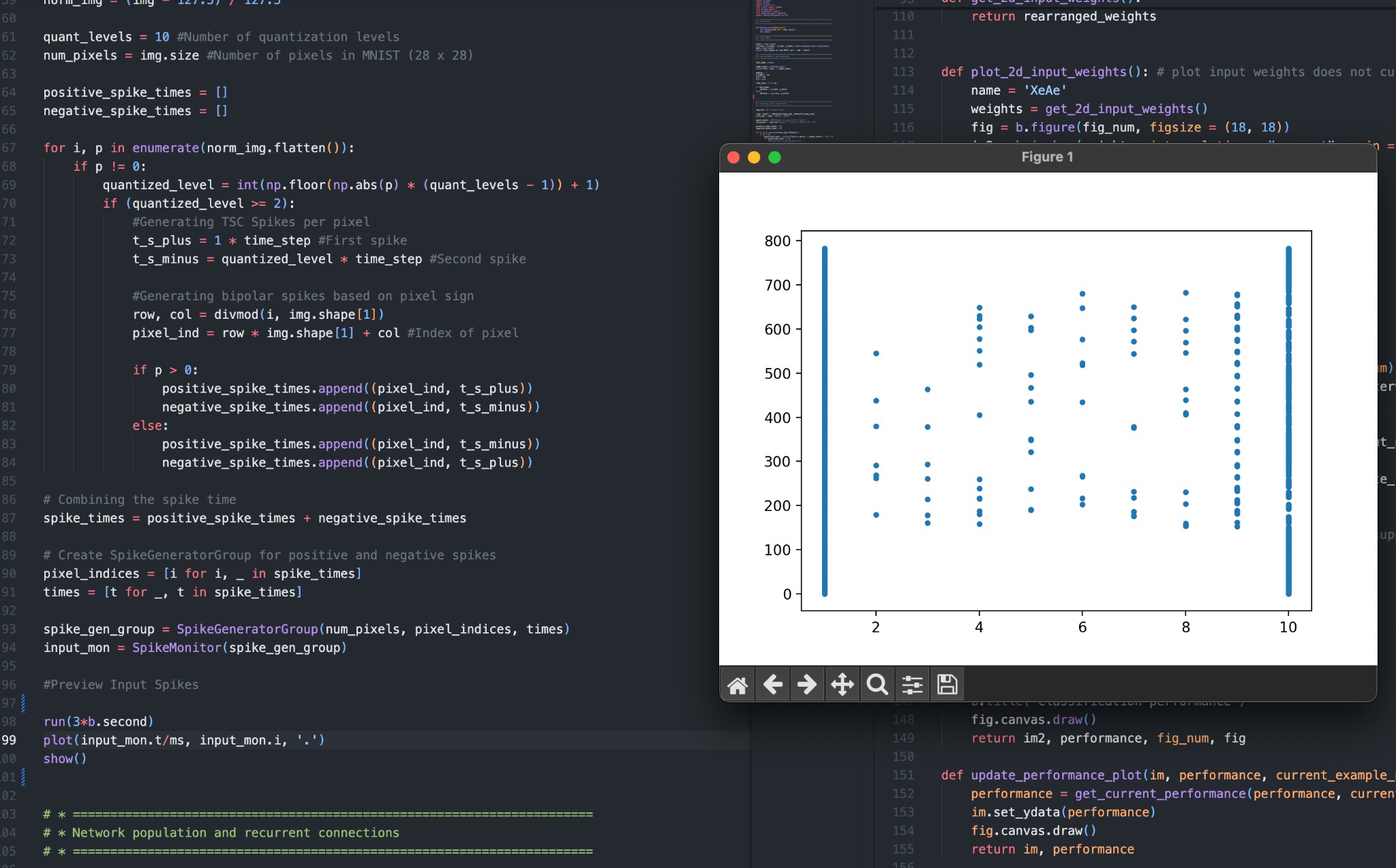
Temporal spike-input raster
- review questions: which neurons dominate firing, how often does the refractory mechanism activate, and how does the same input behave under fixed seeds? “More natural-looking” spike patterns are an observation, not an accuracy metric.
- References saved in this journal section
- https://pmc.ncbi.nlm.nih.gov/articles/PMC8414972/#_ad93_
- https://brian2.readthedocs.io/en/stable/reference/brian2.input.spikegeneratorgroup.SpikeGeneratorGroup.html#brian2.input.spikegeneratorgroup.SpikeGeneratorGroup.set_spikes
- https://brian2.readthedocs.io/en/stable/user/input.html
- https://github.com/GenevieveF/Diehl-Cook_2015_Brian2/blob/main/Diehl%26Cook_spiking_MNIST_B2.py
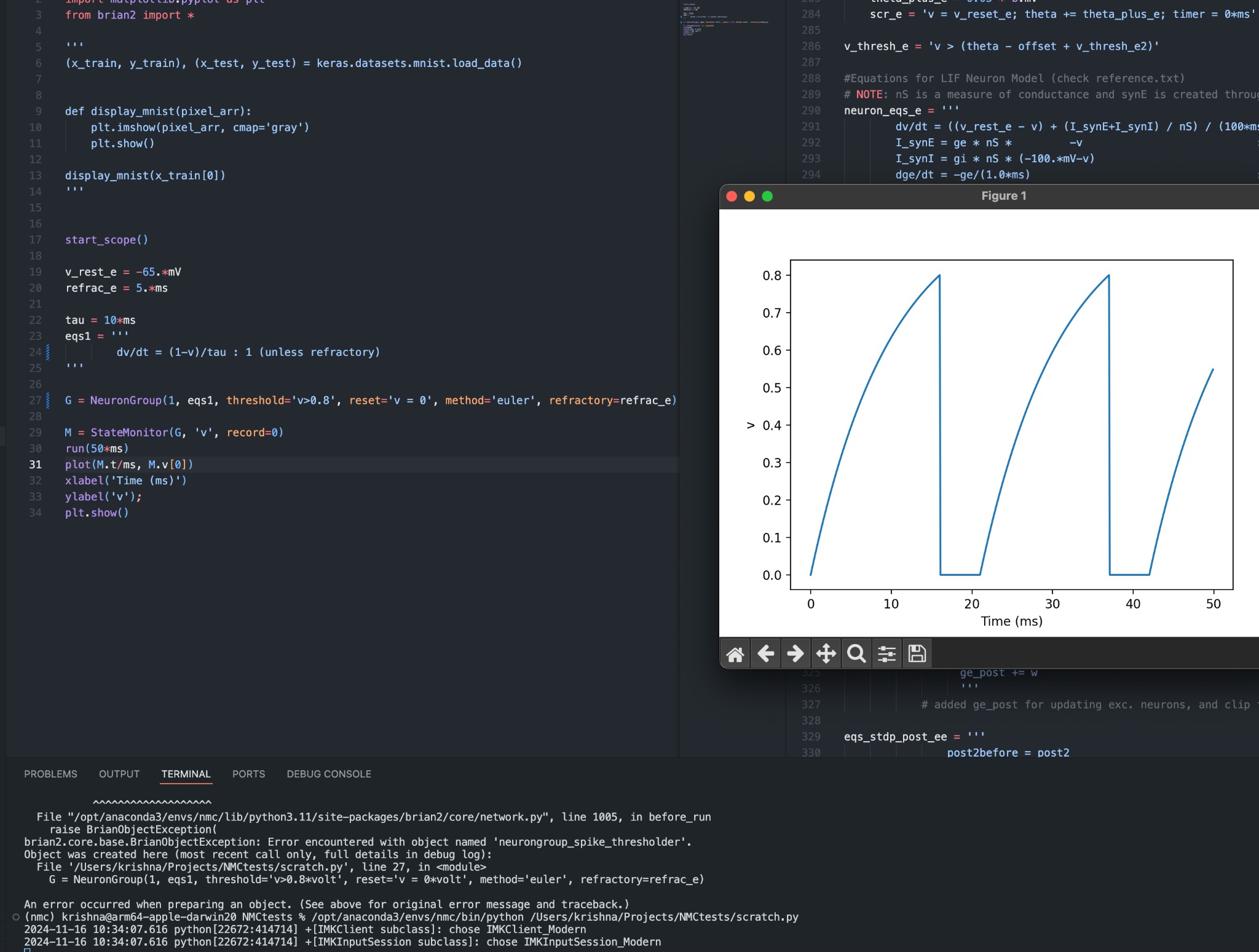
Periodic neuron response