Motor and balance tests: failure cases are part of the reference
10 lb each side: didn't turn. useful failure, keep it
5 lb averages look better than the slow individual trials. need load + starting angle + commanded rotation in the same row
- CSEF motor tests record that 10 lb on each side never turned in seven trials. At 5 lb per side, the rows labeled ±20°…±28° have mean turn times roughly 1.391–1.824 s, while an individual trial reaches 2.89 s. The no-load control is faster, with means about 0.616–0.914 s. Keep individual trials as well as means when checking the two-second design criterion.
- The table header mentions a 45° turn, while row labels use other angles. Do not silently treat those labels as commanded motor rotation: they may describe body starting inclination and need confirmation from the original test procedure.
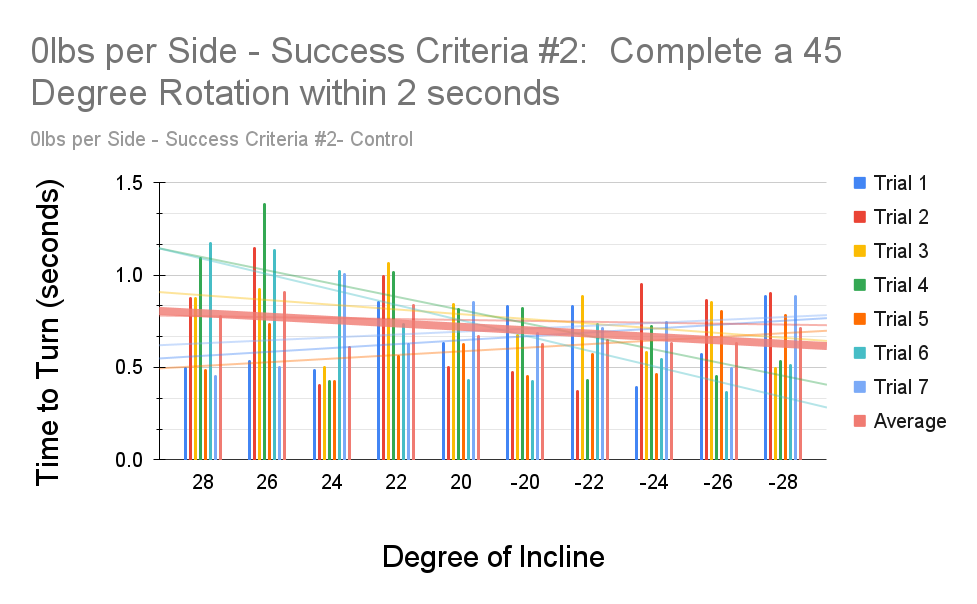
No-load motor turn times: trials and mean.
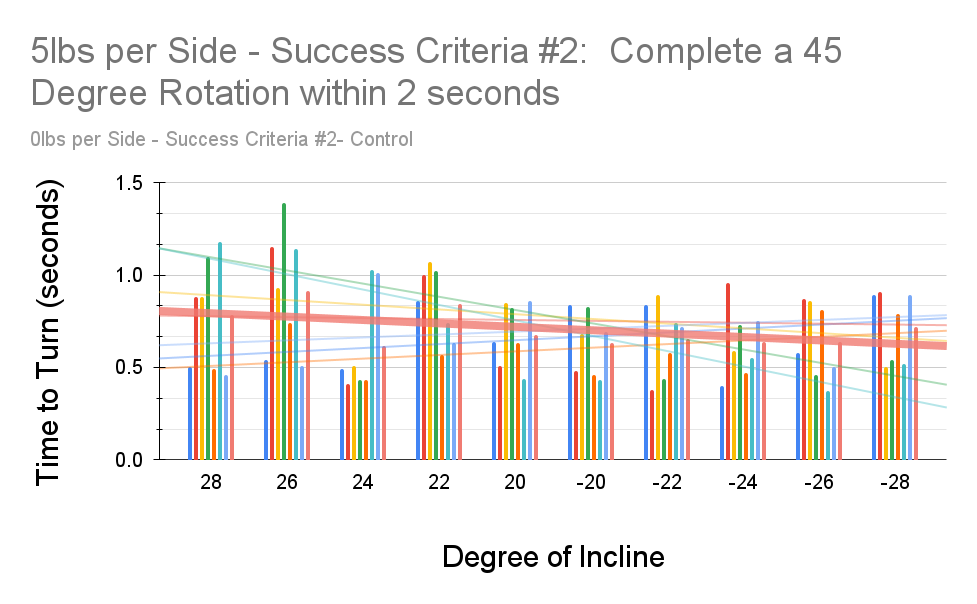
Motor response chart.
- For balance, the recorded with-device success percentages include 76% at both ±20°, 72% at both ±18°, 80% at +16° versus 76% at −16°, and 88% at both ±14°. These are prototype-test results under the source protocol; they are not evidence of clinical fall-prevention performance. Reconstruct the success/failure definition, trial denominator, support arrangement and participant protocol before plotting them against a target.
Sample Data Table Criteria #3is only a planning template: its cells say “% succes of 5.” Do not turn those placeholders into observations.Results.pdfis an exported results reference rather than a new replicate.
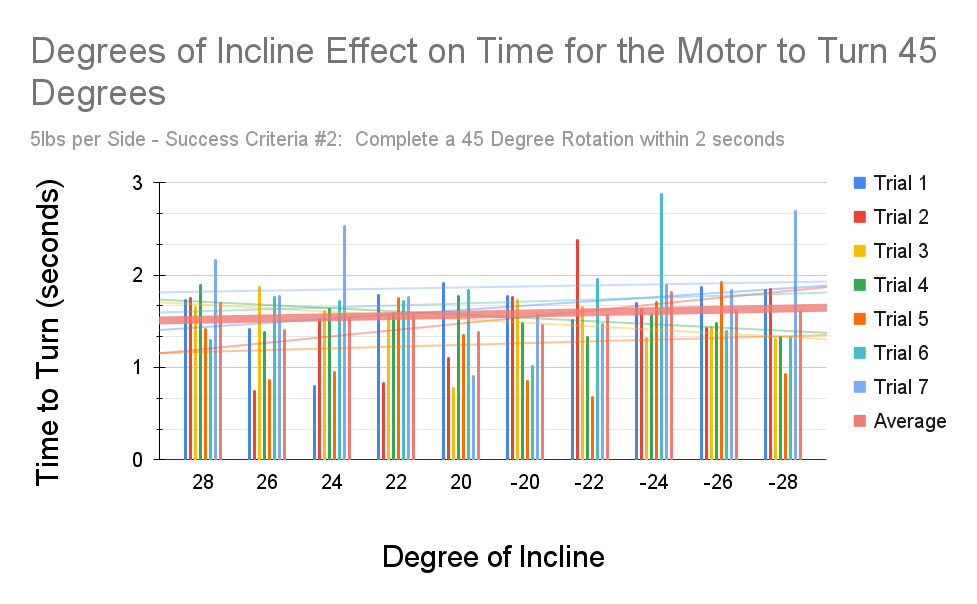
Motor turn time versus body inclination, 5 lb per side.
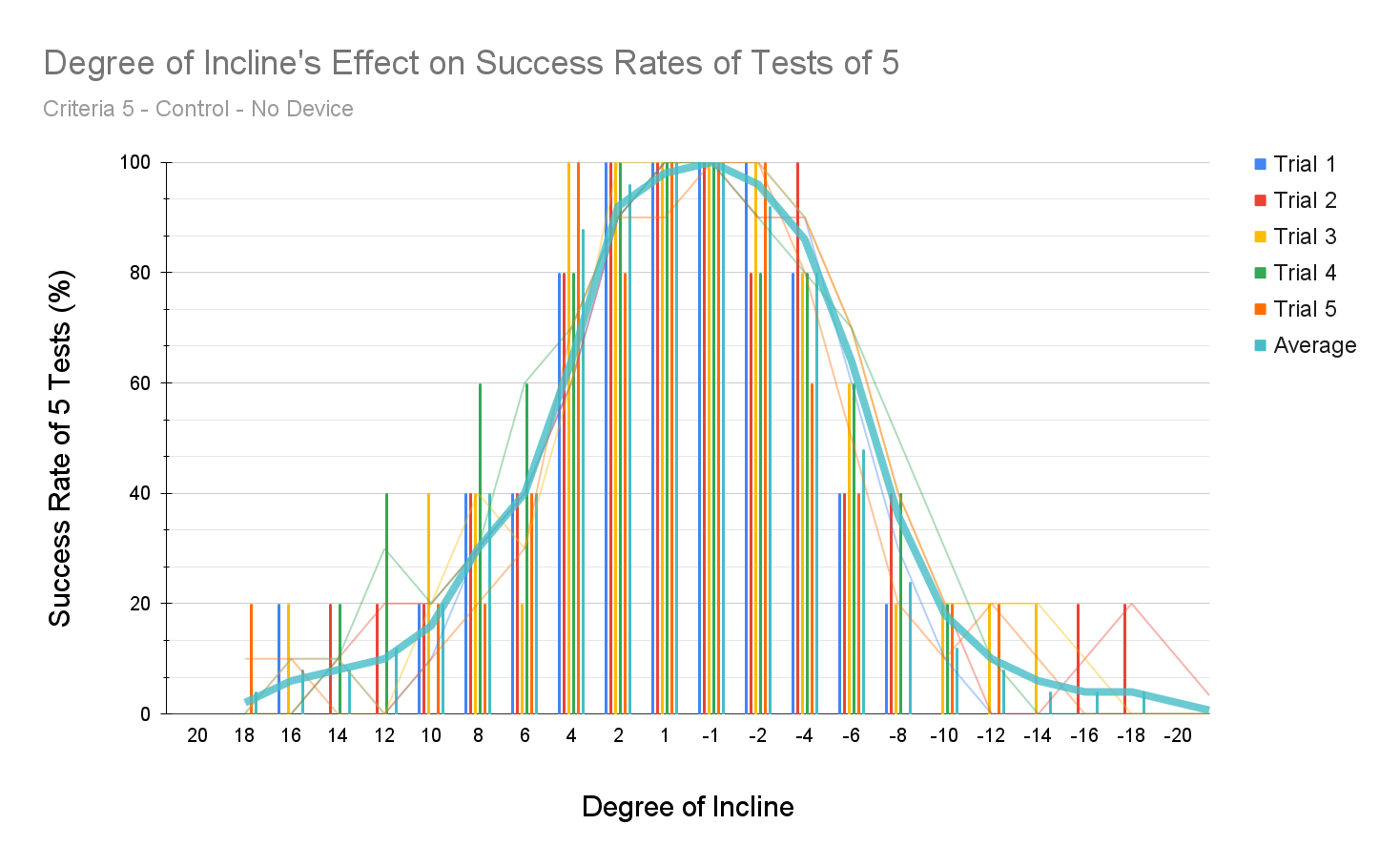
Balance-test success rates without the device.
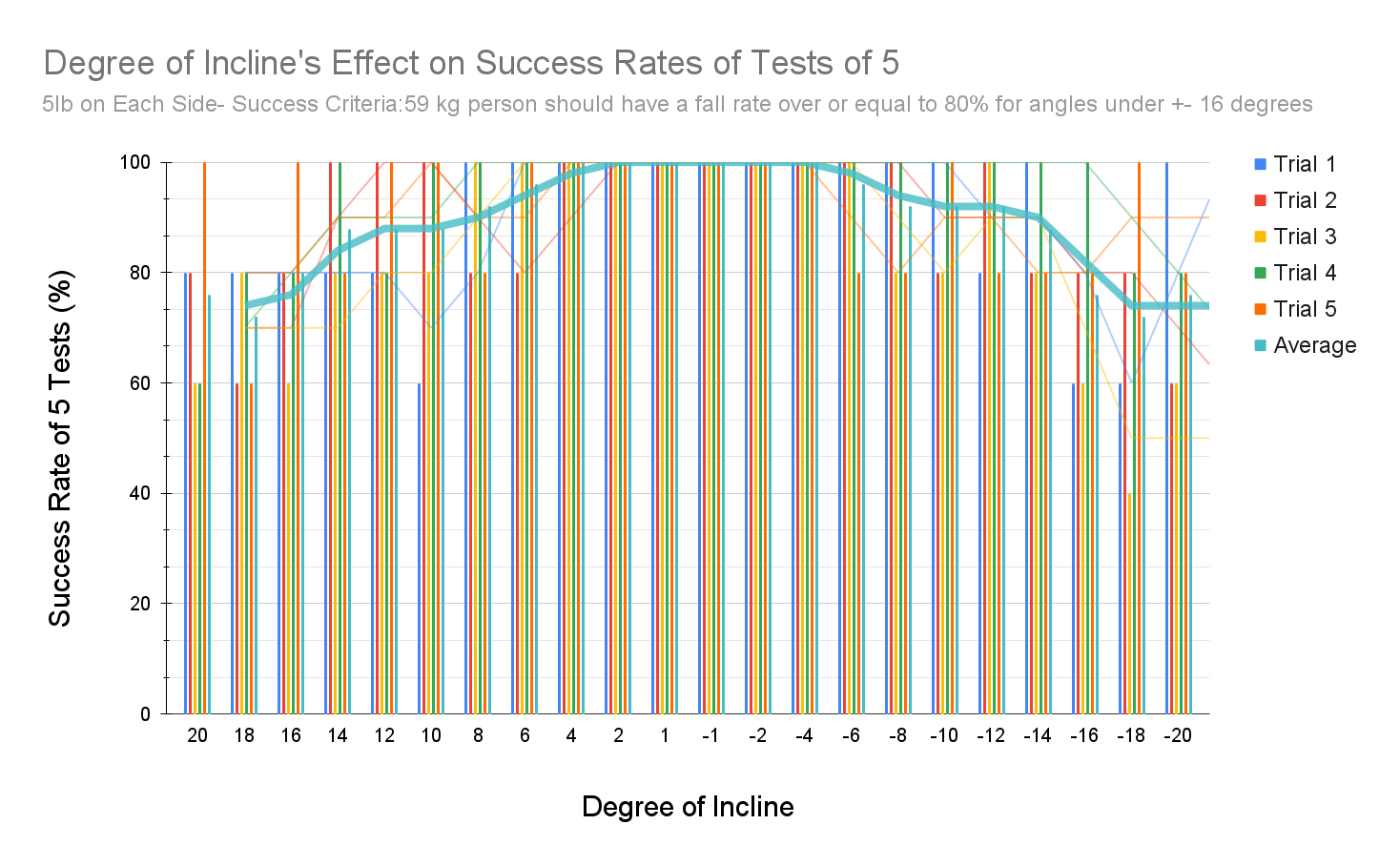
Balance-test success rates with 5 lb on each side.