MesoNet: spike-time inversion and approximation assumptions
Lambert W again... branch choices matter. keep the 1:1 response assumptions beside the inversion before using the quadratic shortcut elsewhere
Theory reference: the theorem packet reduces a single-input response to f(x) = w*k*x*exp(-x/tau_m) and seeks a threshold crossing f(x)=theta. It writes the formal inversion as x = -tau_m * W(-theta/(tau_m*w*k)), then develops a restricted quadratic approximation to avoid difficulties in choosing/handling the Lambert W branch.
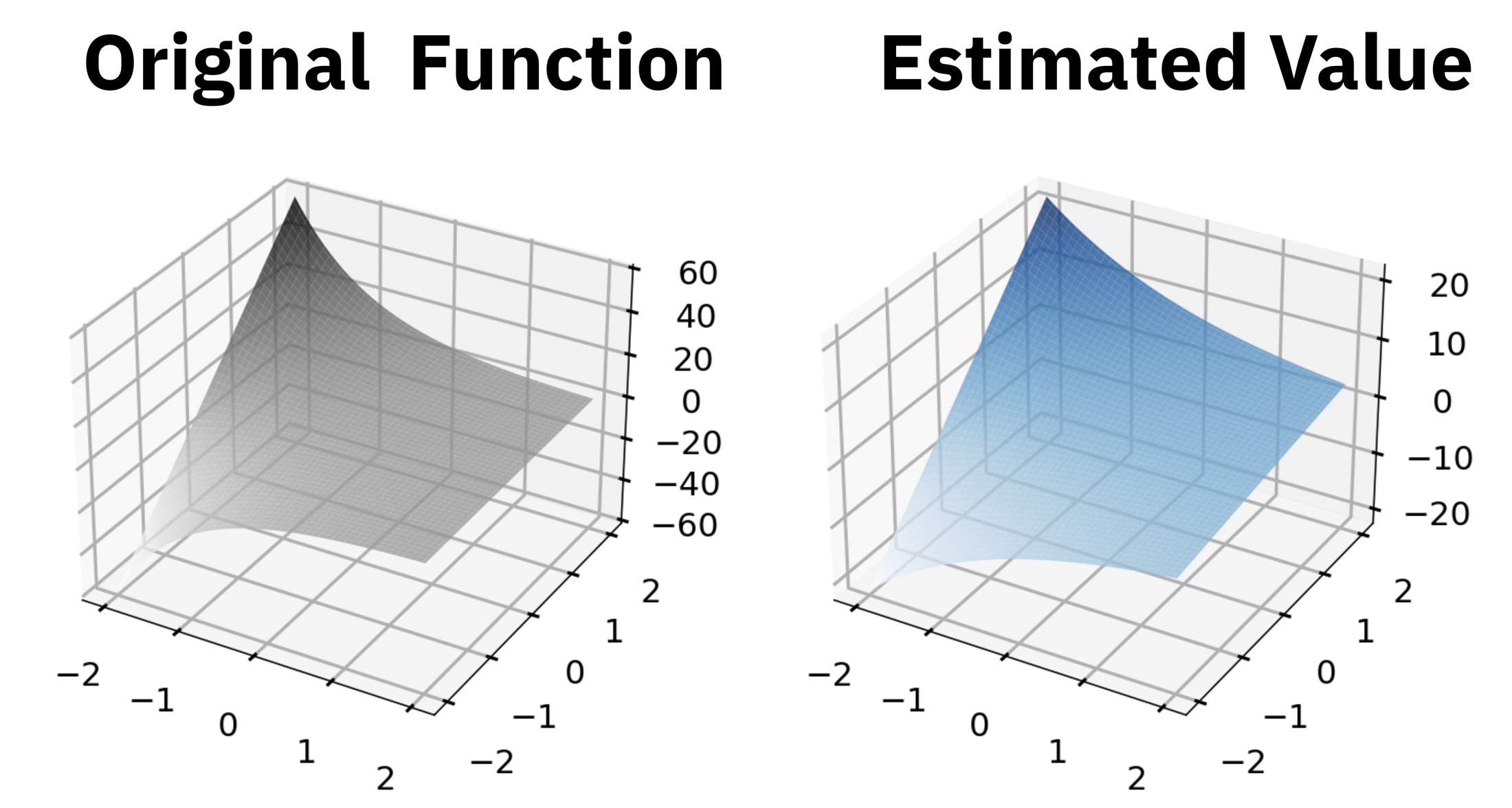
Spike-response function and approximation
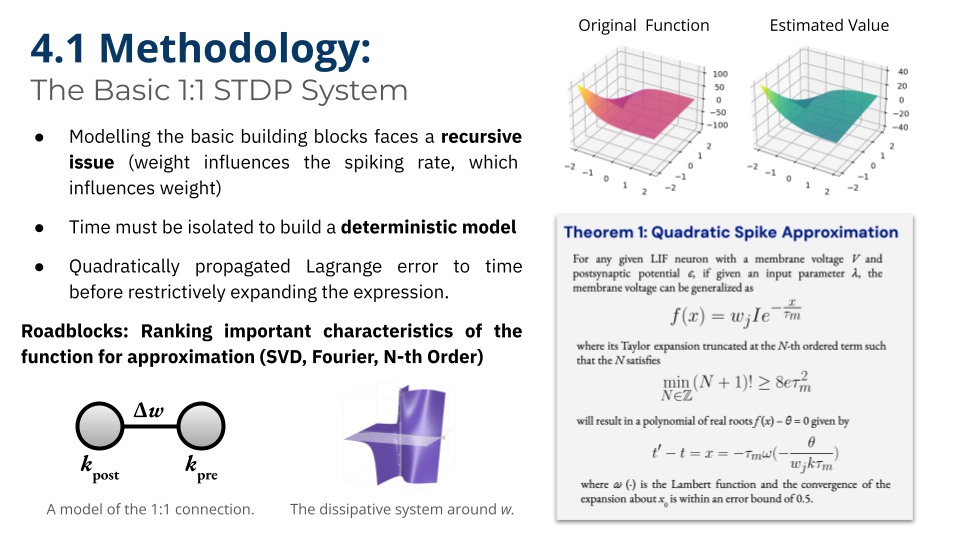
STDP model and approximation
Scope to retain: this is the document's simplified 1:1 model. It is not a general exact solution for every LIF network with arbitrary input and resets. The packet restricts attention to the rising portion up to the peak at x=tau_m when discussing the approximation.
Review questions: identify the branch corresponding to the intended threshold crossing; state when a real crossing exists; quantify approximation error over the actual interval used; and propagate that error into timing differences and weight updates. The text's use of x, firing interval and “rate” should be made dimensionally consistent before transcribing derived formulas.
Notebook purpose: keep the derivation, its assumptions and its numerical check together. A useful test would compare exact threshold crossings with the approximation across the parameter region claimed by the theory, but this reference note does not assert that such a sweep was performed.