MesoNet: triangulated-attribution pseudocode reference
walk through attribution on a tiny graph. edge cost, combined path costs, averaged update—can actually do this by hand before scaling up
later proposal: identify synapses in a layer with sufficiently similar timing errors, collect their presynaptic neurons, and search for an upstream candidate relevant to the group. The preprint's Algorithm 3 gives edge cost C(e)=d(e)/eta_e, where d is physical/functional distance and eta_e is plasticity.
For each presynaptic node p, compute the path cost C_p(x) to candidate x; aggregate those costs, select the smallest combined cost, average the group's local weight updates, and apply an additional scaled update gamma * mean(delta_w_s) to the chosen upstream connection. The text also gives a pairwise exponential relevance score, so reconcile the equation-based and graph-based versions explicitly.
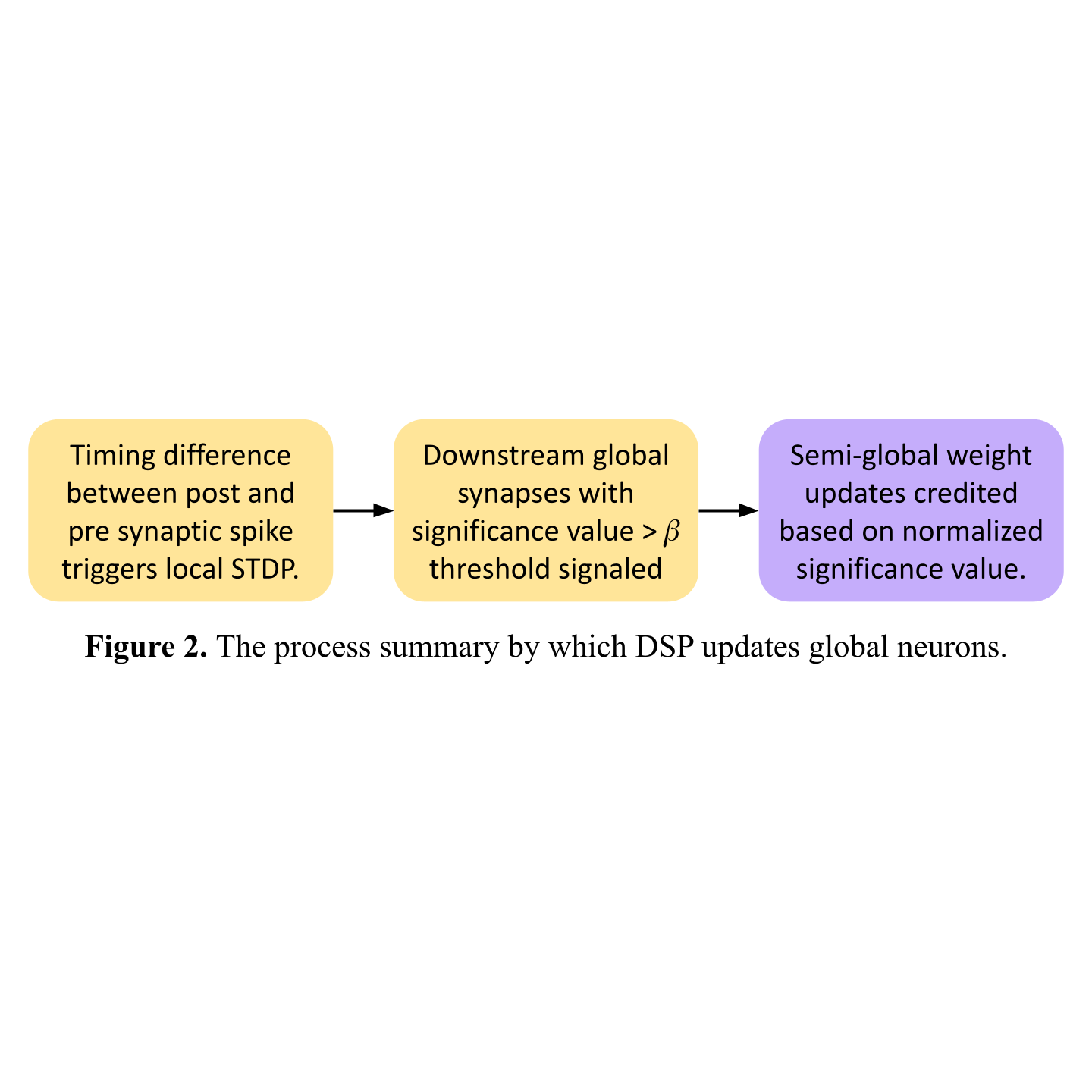
Local STDP and distributed updates
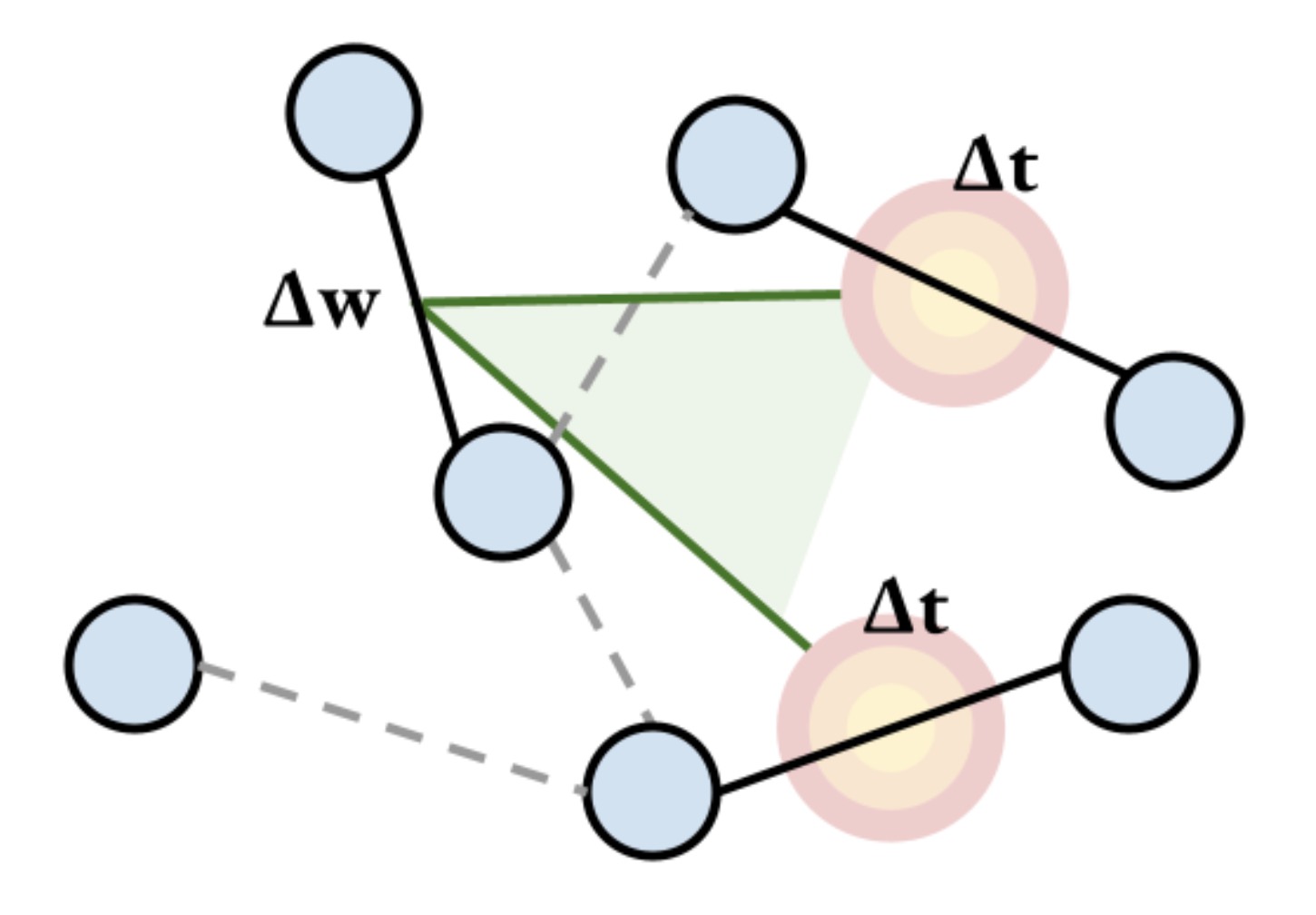
Triangulated attribution
implementation questions: require nonnegative finite edge costs; decide what to do with zero plasticity; specify graph direction and candidate eligibility; define tolerance for “same” timing error; and choose sum versus maximum/minimum aggregation. The pseudocode lists alternatives rather than one unambiguous implementation.
cost question: searching for every group may cost more than the synaptic updates it replaces. Record graph refresh frequency, number of searches and number of extra updates separately. The source's complexity statement does not by itself establish the cost of the entire implemented training loop.
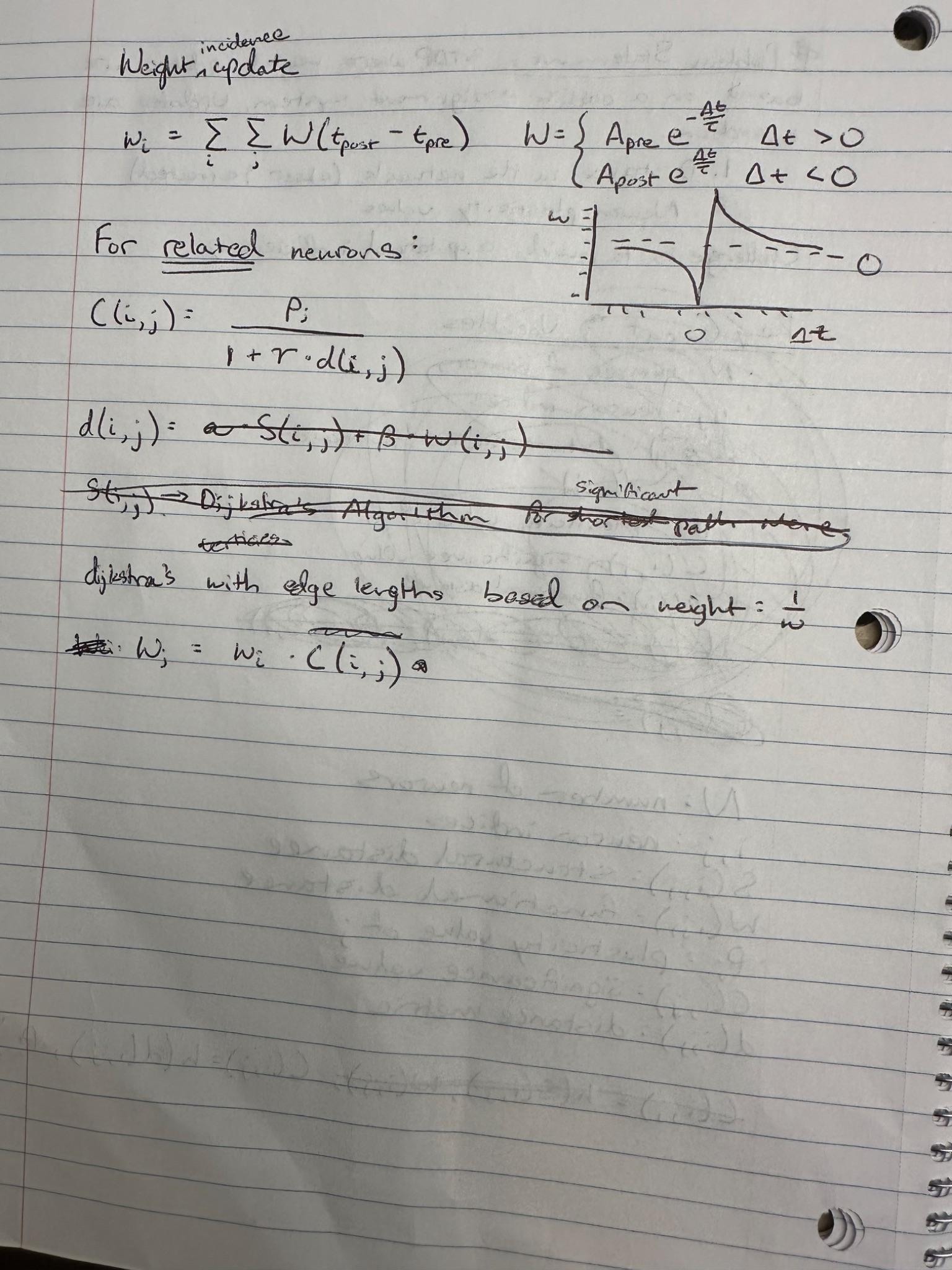
Attribution and weighting notes