Gyroscope tables: error, drift and calibration versions
angle error / 2-minute drift / rate noise — three different things
means under 5° but some readings over. also need to match each calibration number to its own run instead of borrowing the nicest one
The CSEF angle-error table contains seven repeats at ten signed angles (±5°, ±15°, ±25°, ±35°, ±45°). Per-angle mean absolute errors range approximately 0.697°–3.766°, below 5°, but individual entries include 5.34° at +25°, 5.21° at −15° and 5.46° at −25°. A mean-error criterion is not a guarantee that every reading lies within five degrees.
The two-minute drift table is a separate measurement; retain its trial duration and signed starting angle rather than merge it with static angle error. Example seven-trial mean drifts are about 0.8457° at 0° and 2.3543° at −25°.
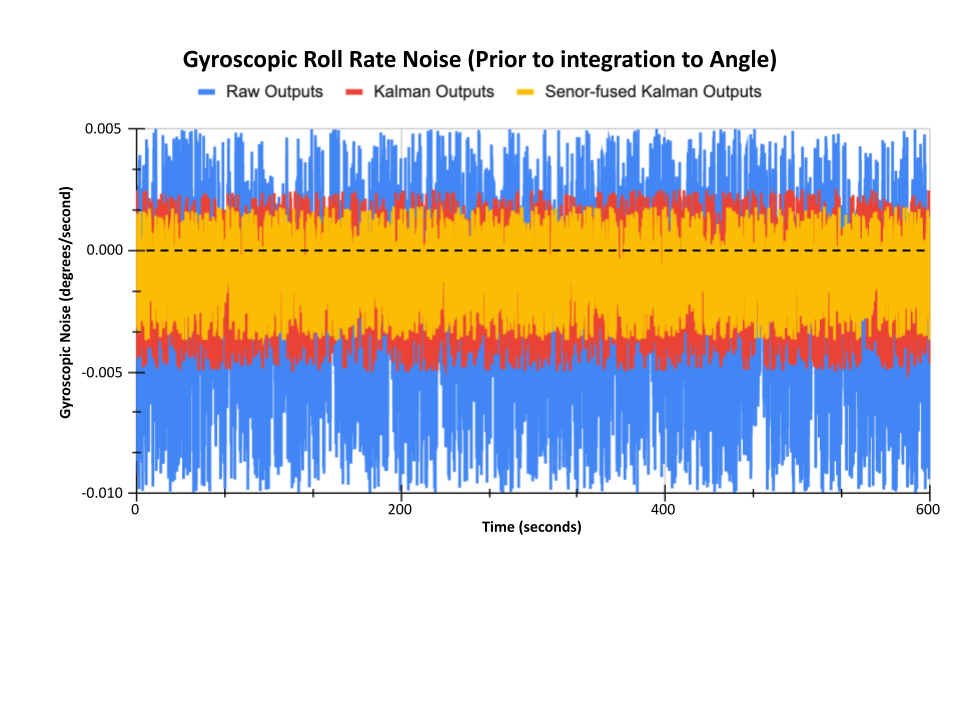
Raw, Kalman-filtered and sensor-fused angular-rate traces.
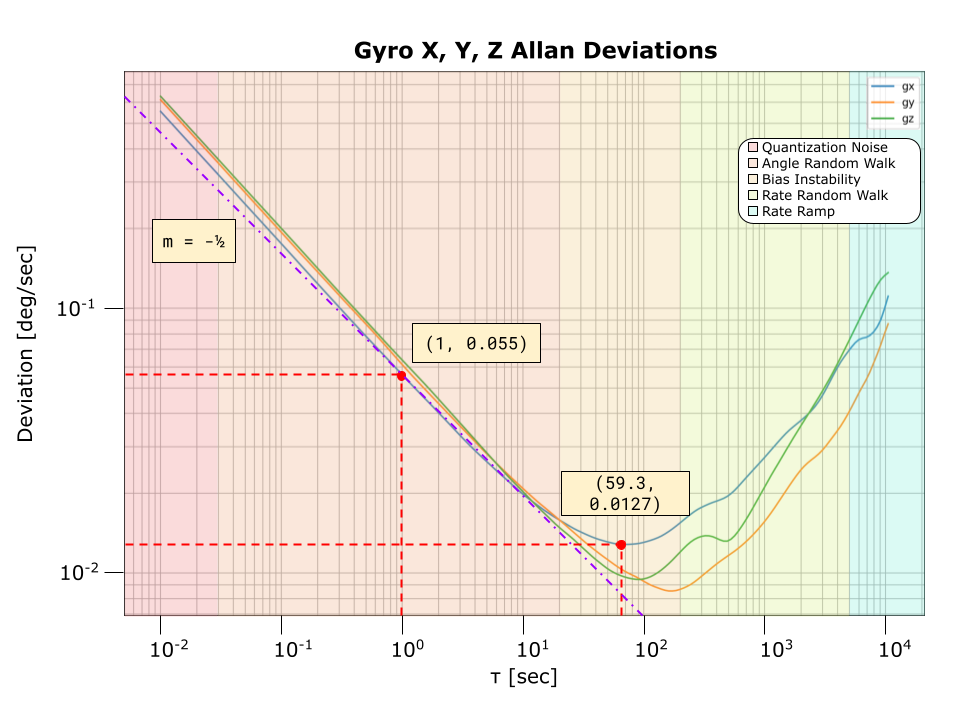
JIC gyro Allan-deviation plot.
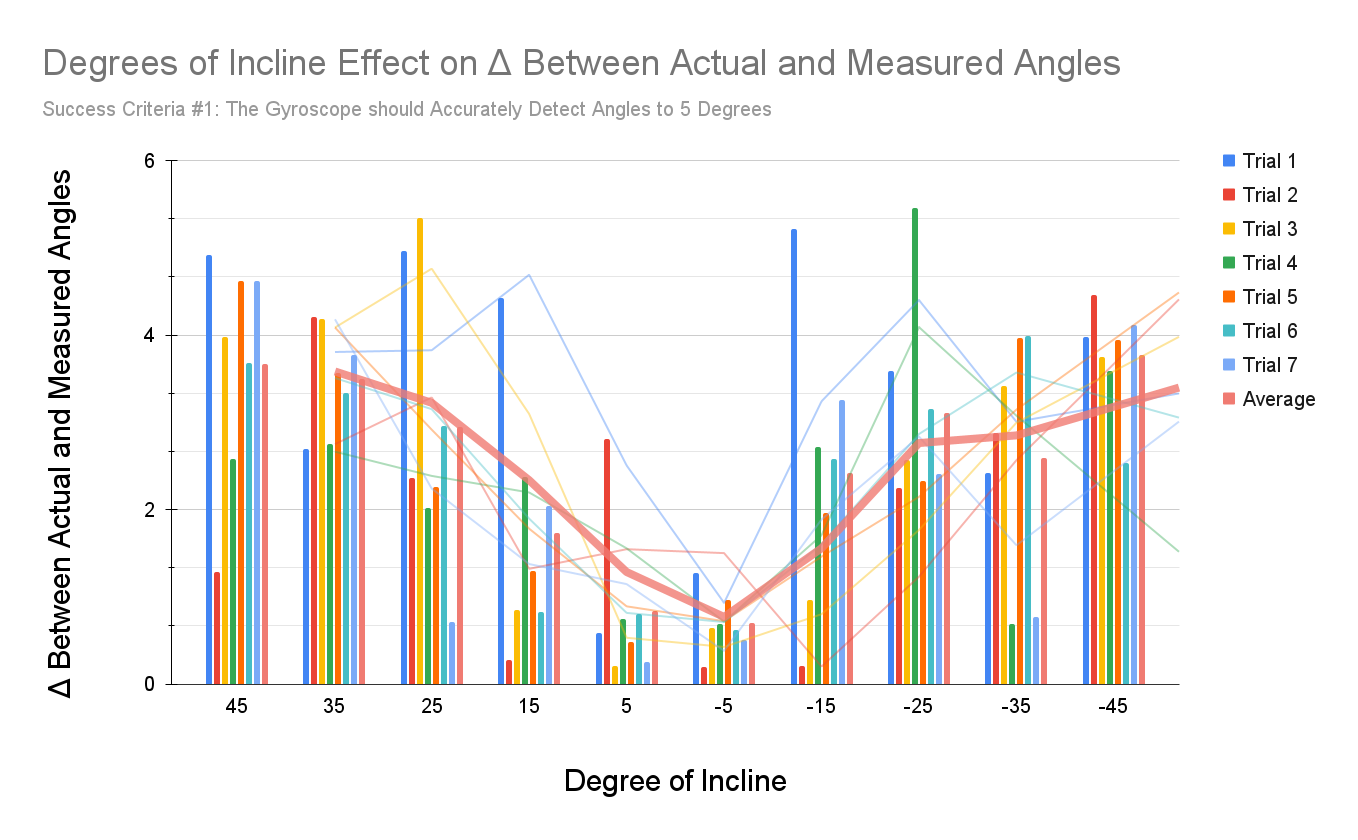
Angle-measurement error: seven trials and the mean.
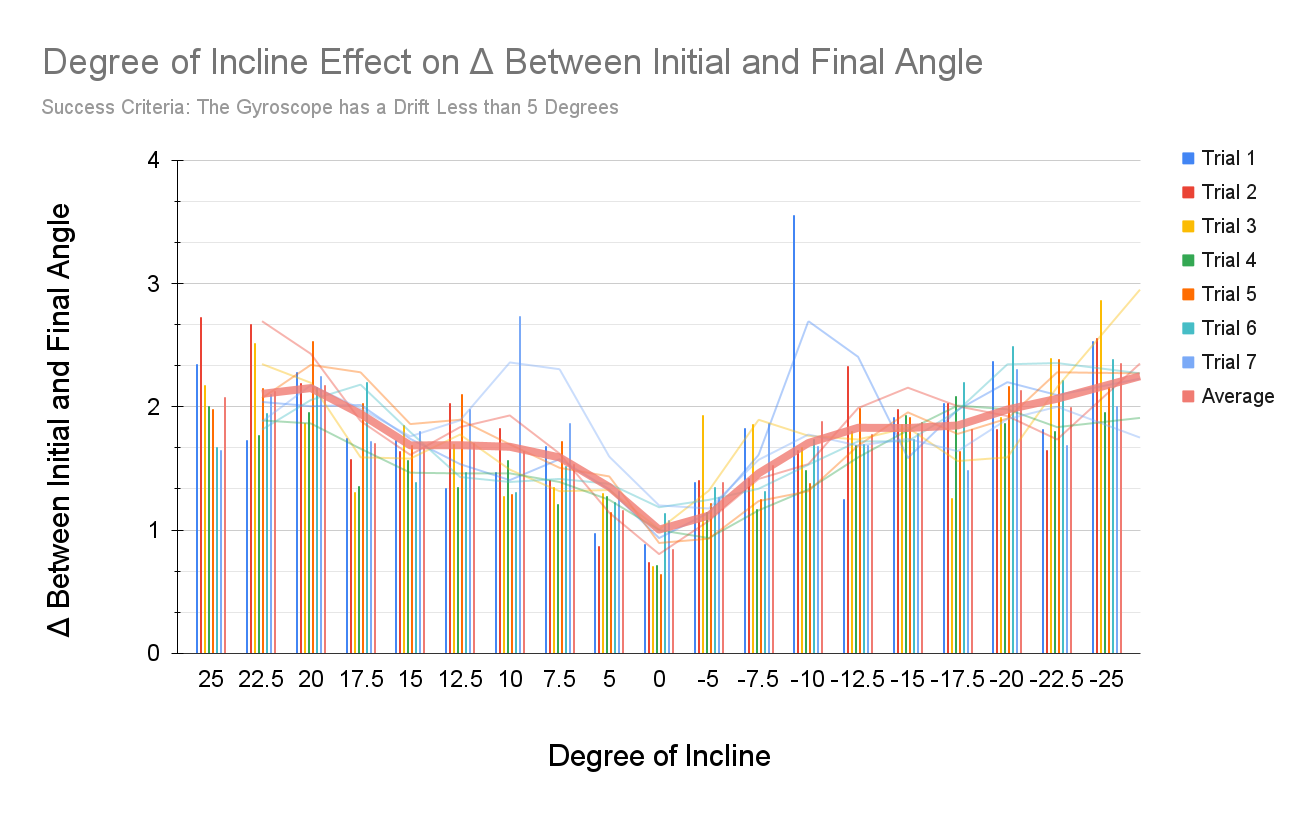
Initial-to-final angle difference across inclinations.
Gyro Rate Noise - JIC Prep exposes 3,001 records with Time 0…3000 and columns Raw Outputs, Kalman Outputs, and the source spelling Senor-fused Kalman Outputs. The export does not make its time unit/sample interval clear. It should not be presented as the entire six-hour, 100-Hz calibration trace discussed elsewhere. The poster quotes ARW 3.30 → 0.096 deg/√hr and bias instability 68.91 → 0.58; other notebook versions use different post-filter figures, so keep the calibration/version identifier with each pair.
Useful reference question: which axes are corrected using gravity, and which remain unobservable from the accelerometer alone? The short file info separates bias instability from angular random walk and flags yaw as particularly sensitive. Keep raw angular rate, integrated angle and Allan-deviation statistics in distinct plots.