
Center-of-mass scratch calculation: check the lever-arm units
350 cm lever arm??? check whether that was meant to be 35
one digit and the COM shift grows a tentacle. redraw origin + actual weight positions before reusing this
Board Stuff gives the one-dimensional relation x_COM = (m1*x1 + m2*x2)/(m1+m2) and examples using a 49.8 kg person, masses 9.1 kg or 4.5 kg and an offset written as 350 cm. The resulting shifts are roughly 54 cm and 29.01 cm. The arithmetic follows the written units, but a 350 cm device lever arm is a major unit/geometry question; check whether 35 cm was intended before reusing the numbers. Changing the offset by a factor of ten changes the predicted shift by the same factor.
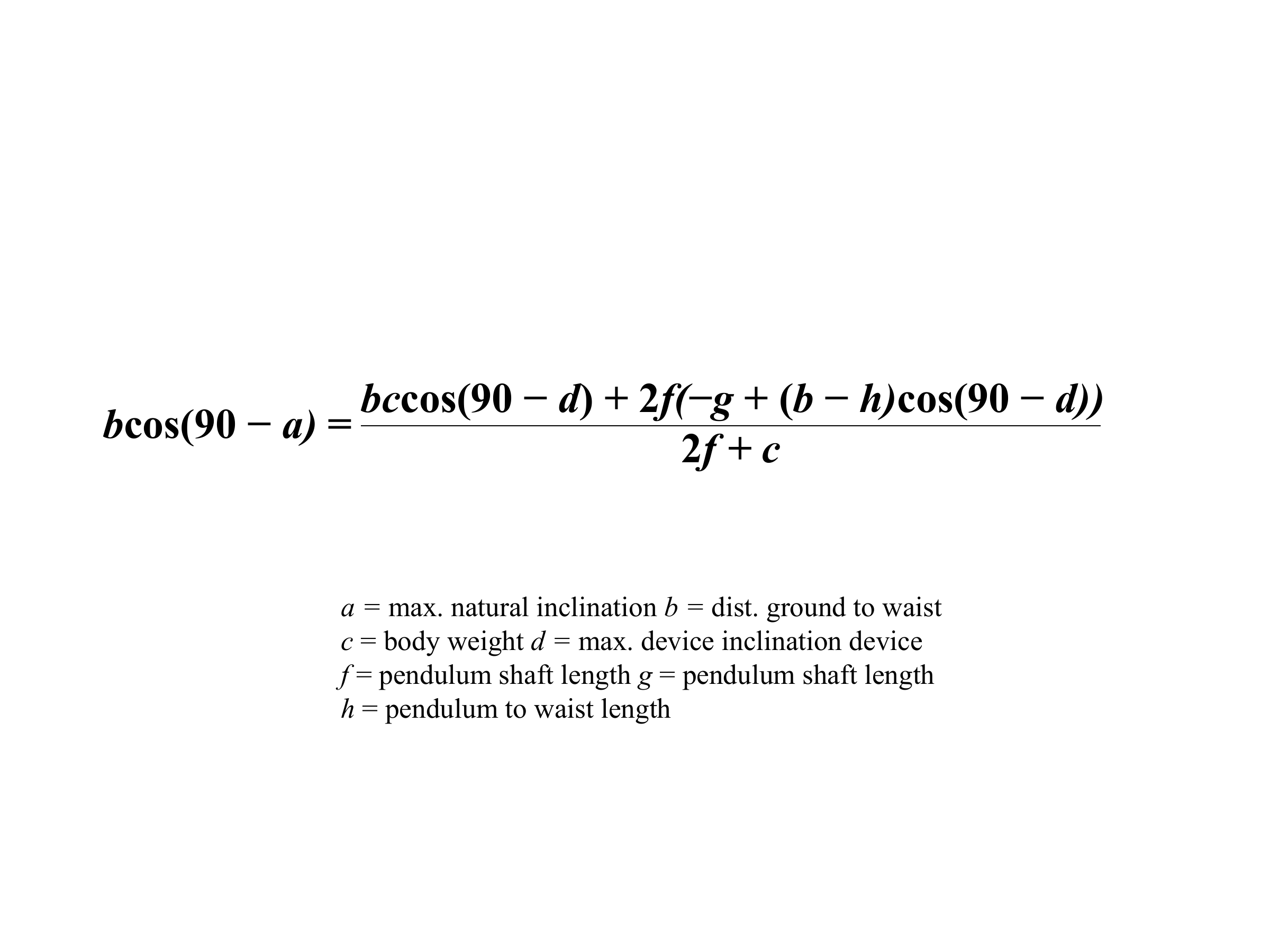
Rearranged center-of-mass equation and variable definitions.
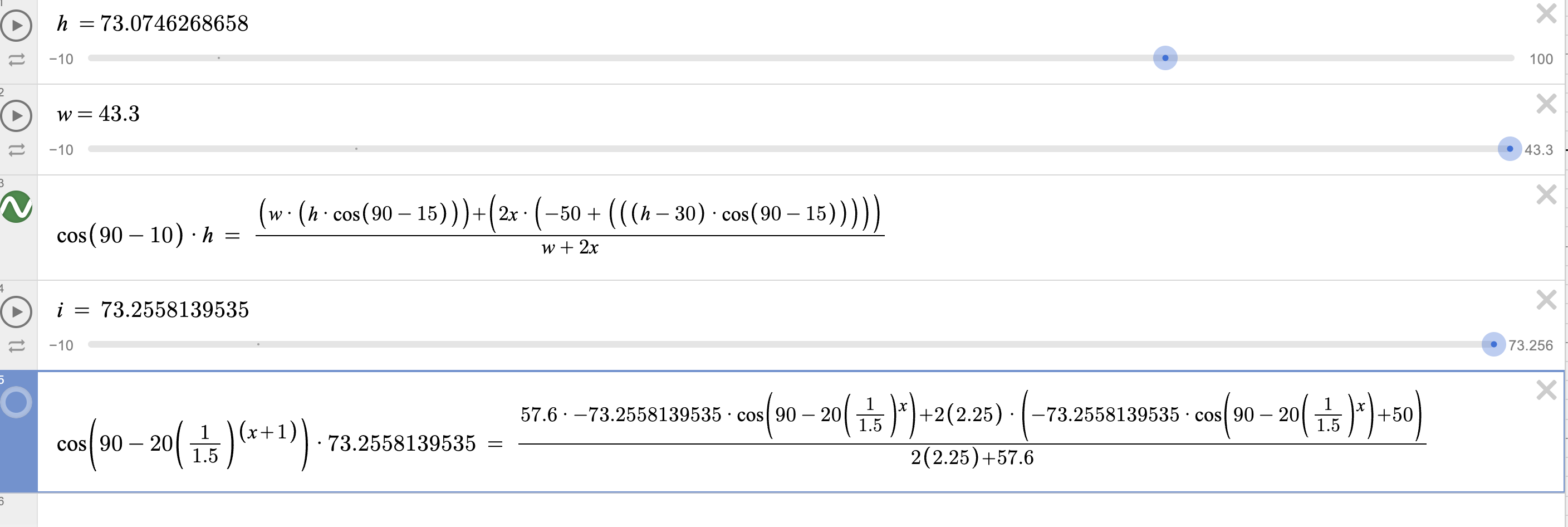
Center-of-mass calculations with 43.3 kg and 57.6 kg examples.
This simple weighted-position model is a geometry estimate. It leaves out torso rotation, stance/support polygon, inertia, motor acceleration and the wearable's own mass. Save a diagram defining the coordinate origin, sign and actual weight-center positions next to any calculation.
The generic Board Items file also records practical constraints: $200 budget, Arduino UNO, accessible/cardboard structure, roughly 48 hours of work, maximum 4.5 kg each side and a 59 kg/12° target. Those are design targets and differ from the 49.8 kg example; avoid conflating the two masses in one derivation.