Biological and simulated alignment benchmarks
need both biological + simulated cases. simulation gives known history; structural references are a different check, can't just call both “truth” and move on.
saved reference: BAli-Phy biological-versus-simulation evaluation. The June 13 notes highlight a discrepancy between behavior on biological sequence data and simulated data as a reason to include both.
benchmark distinction: simulation supplies a generative alignment/tree; curated biological alignments supply a different kind of reference, often tied to structural evidence. Report which agreement is being measured instead of labeling every reference “evolutionary truth.”
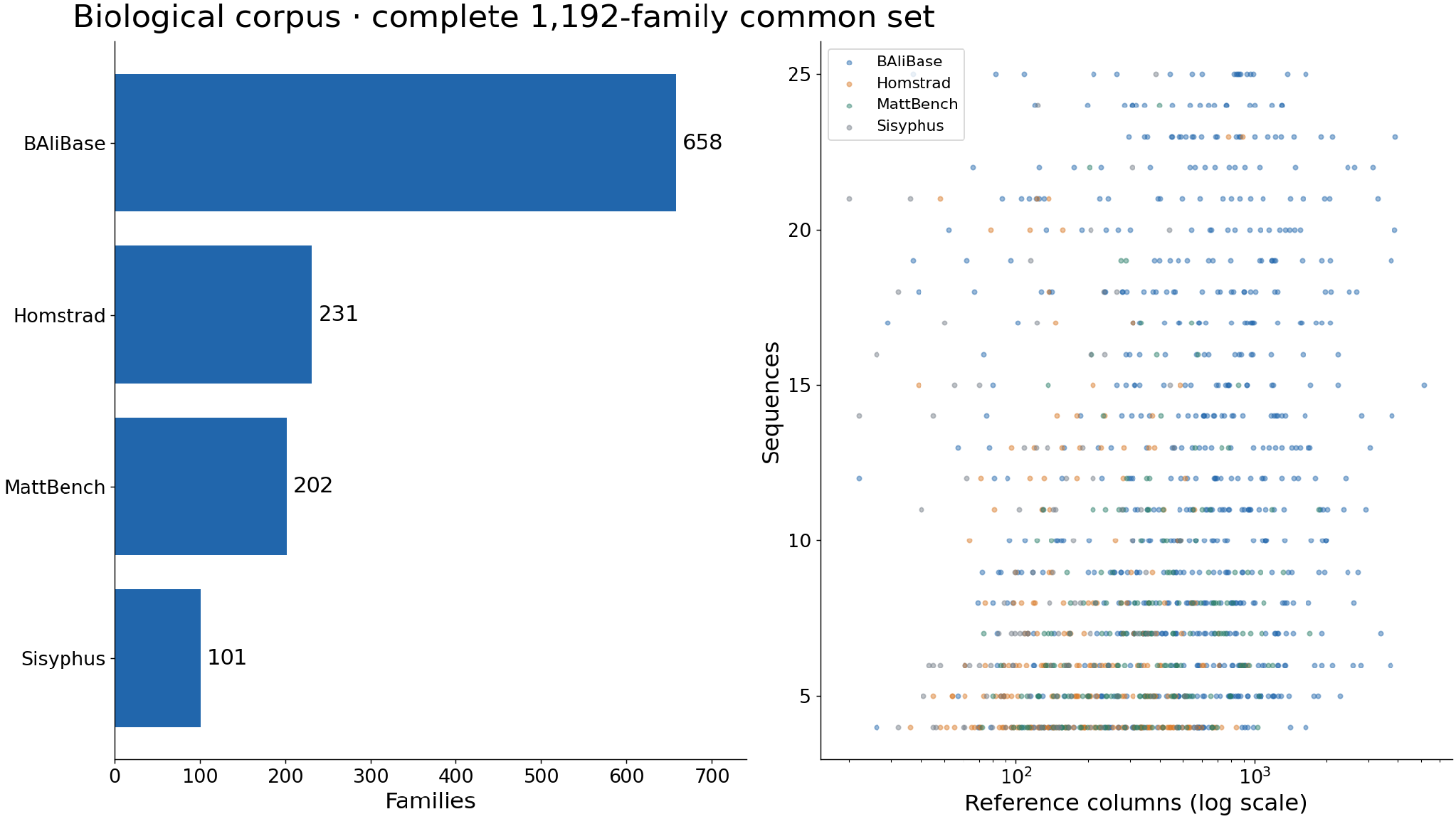
Biological benchmark coverage across four reference collections.
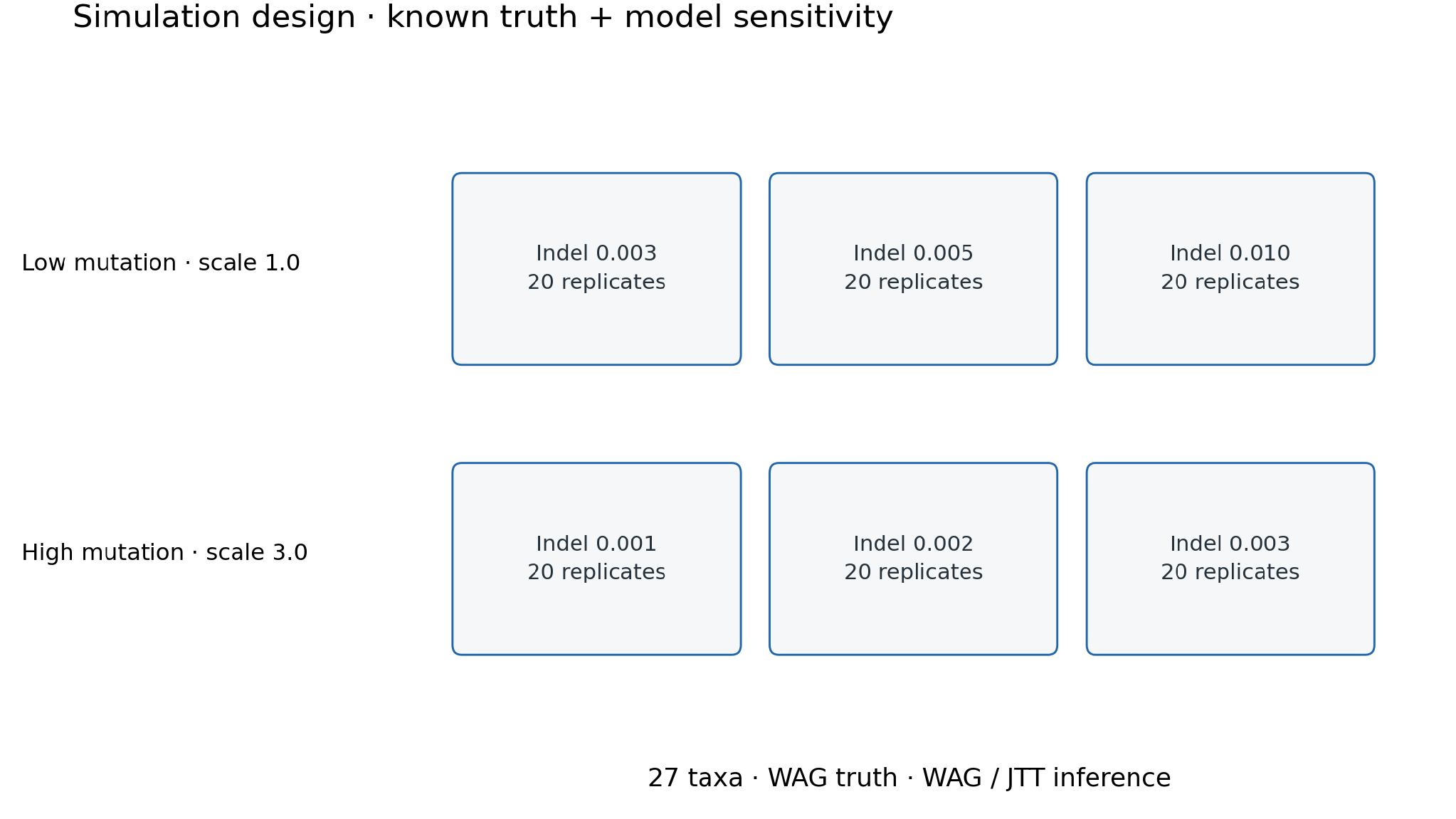
Planned simulation grid: six conditions, 20 replicates each, and 27 taxa.
planned comparisons: reproduce a published protocol where feasible, then run joint co-estimation under explicit time budgets. Keep alignment precision, recall, expansion/length and topology metrics separate; one aggregate number can hide underalignment or overextension.
- review questions: does the simulation model favor one inference model, and are its taxa/length/indel regimes representative? Does a favorable alignment score occur before chains are scientifically converged? The working notes explicitly contemplate both issues, so accuracy and convergence should be reported as separate outcomes.