EvolMoves: evaluation axes and code-reading map
alignment accuracy, tree recovery, parameter recovery, mixing — separate axes. faster iterations are nice but ESS/time is the more useful number. Also come back to the fixed-tree vs fixed-alignment controls.
code-reading pointers in the plan: doc/tex/main.tex for the specification and doc/plans/competitive-platform-roadmap.md for implemented/planned features. Proposed experimental models such as TKF Dirichlet Process and MixFrag may be beyond the initial paper's scope.
june 13 planning axes: alignment accuracy; tree reconstruction and MCMC mixing; recovery/calibration of evolutionary parameters. The notes ask what established experiments demonstrate tool integrity and what dataset sizes are realistic.
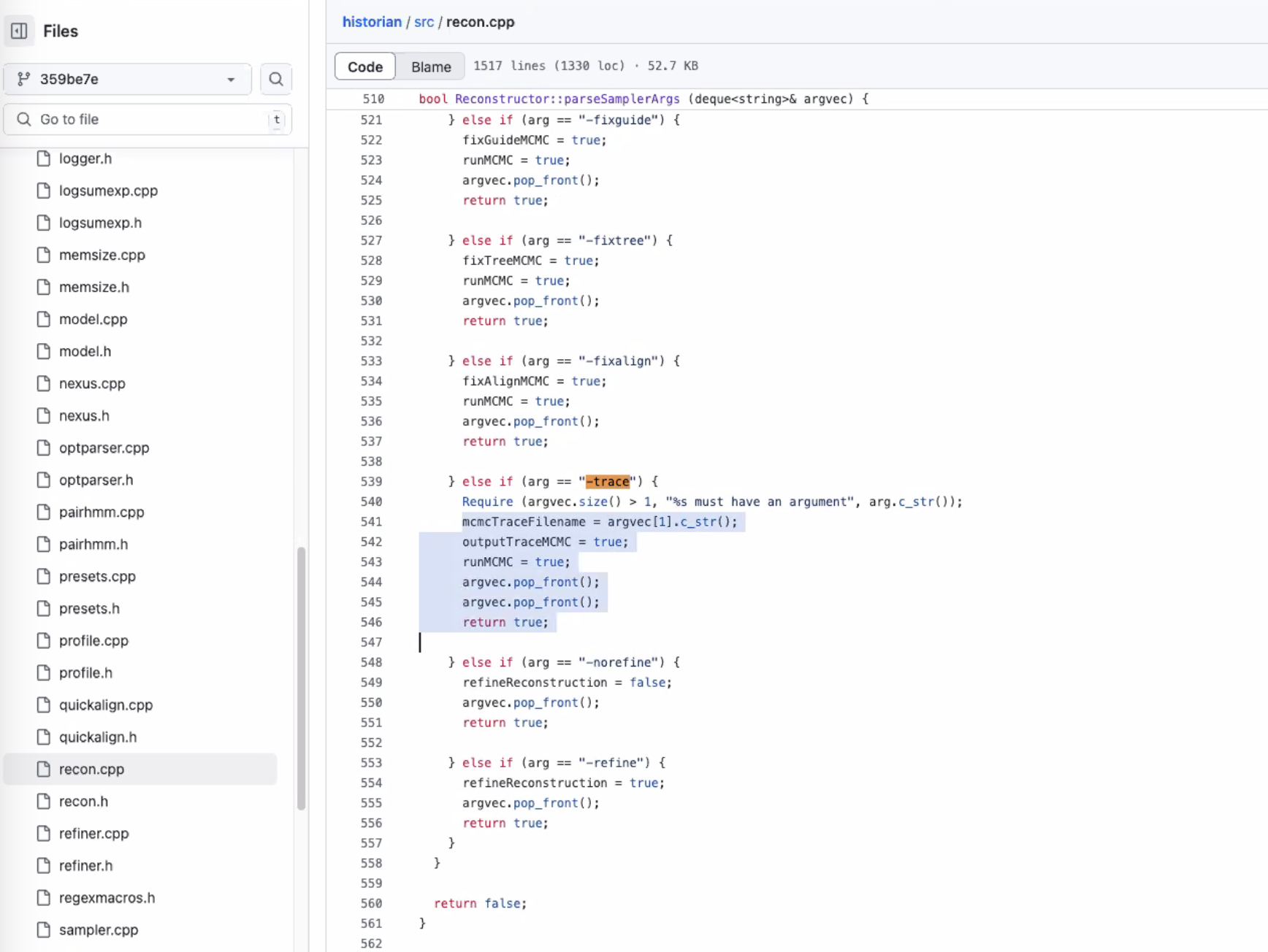
Historian recon.cpp: -fixtree, -fixalign, and -trace arguments.
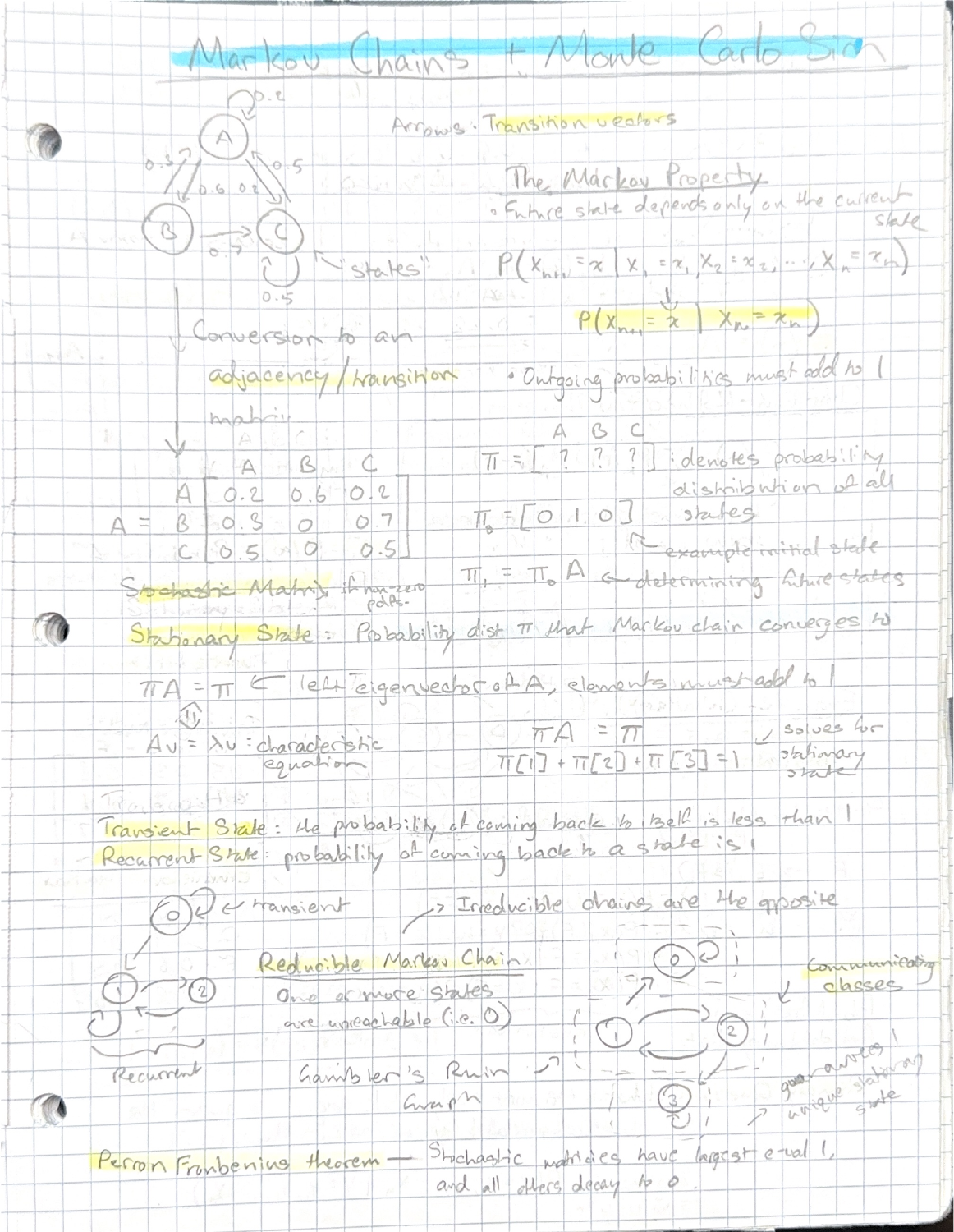
My Markov-chain notes: transitions and stationary distributions.
comparator design: distinguish fixed-alignment tree inference, fixed-tree alignment inference and joint co-estimation. Match model/start/decoder assumptions where possible and expose differences rather than claiming parity from the tool names alone.
metrics proposed: alignment SPFN/SPFP, RF tree error, ESS per second at a specified taxon count, and calibration under simulation. A wall-clock speedup with worse exploration is a different result from increased effective samples per unit compute.
review questions: which result is the paper's central claim, what experiment can falsify it, and which scope extensions should be deferred? The source is a plan, not completed evidence of superiority over the listed tools.