
Historian evaluation: equal iterations versus equal time
equal iterations vs equal time, still need both views. “iteration” isn't necessarily the same amount of work across tools + concurrent processes can mess with timing.
report design: Experiment 1 uses four representative SCOP parameter sets under an iteration-based comparison; Experiment 2 uses twenty diverse sets with a two-hour wall-clock ceiling; Experiment 3 returns to four representative sets with a seven-hour ceiling. The machine is reported as a 2021 M1 iMac with 16 GB memory, with two sequence cases processed concurrently and four tool processes per batch.
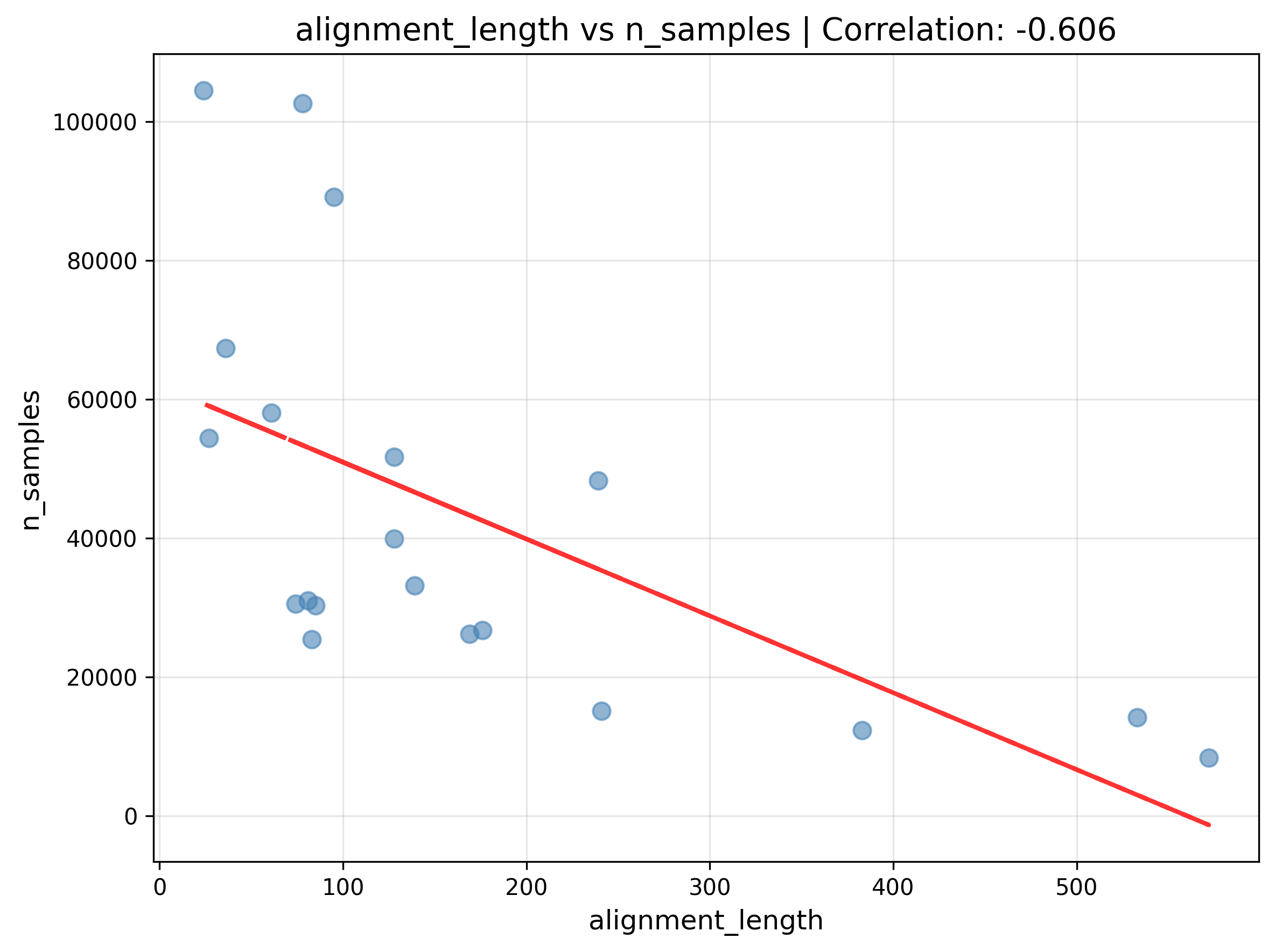
Historian: alignment length versus n samples.
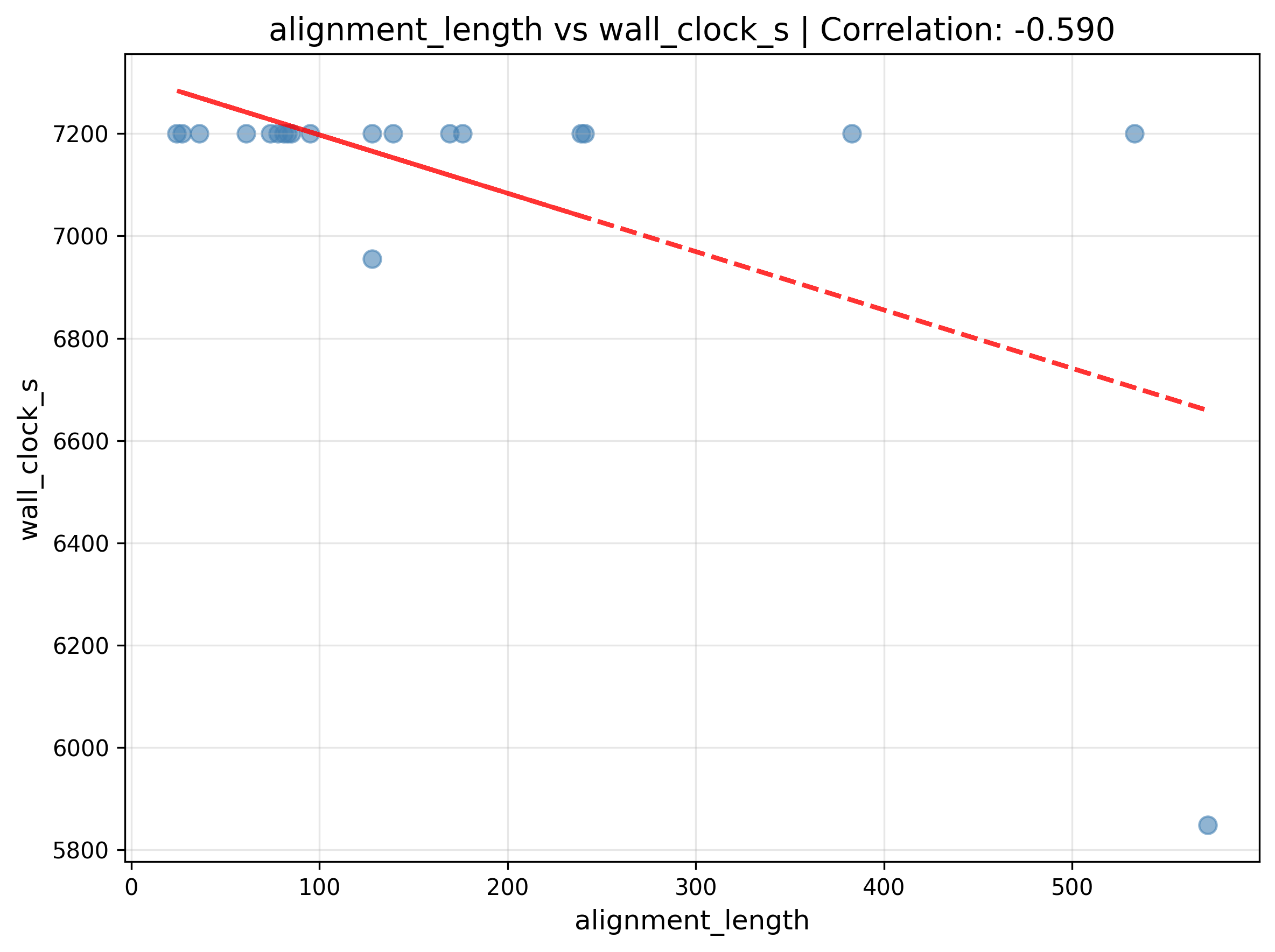
Historian: alignment length versus wall clock s.
configuration inconsistencies to resolve: the generic method prose says 100k iterations per sequence, the Experiment 1 section says 2,000, and sample commands show different numeric limits for the two tools. Some may reflect iterations versus samples-per-node or later runs, but the text alone does not settle equivalence.
reference requirement: use actual command lines and run manifests for each plotted result. Distinguish maximum allowed work, work completed, wall-clock timeout and scientific convergence. Parallel execution can also affect the runtime comparison if tools contend for CPU or memory.
- review questions: what constitutes a comparable iteration across tools, and are partially completed runs scored under a prespecified policy? Preserve these as protocol questions rather than reporting an unsupported speedup.
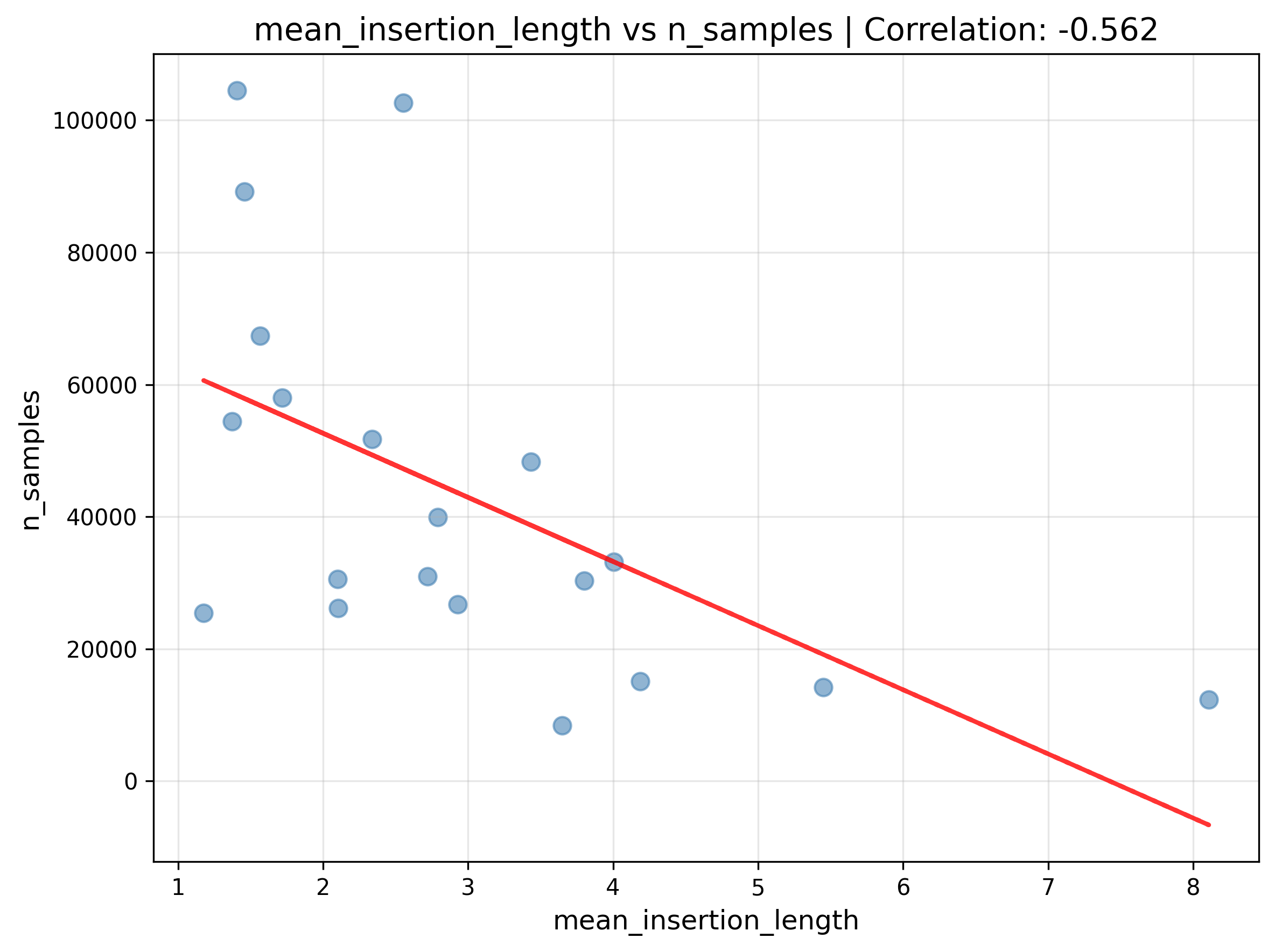
Historian: mean insertion length versus n samples.
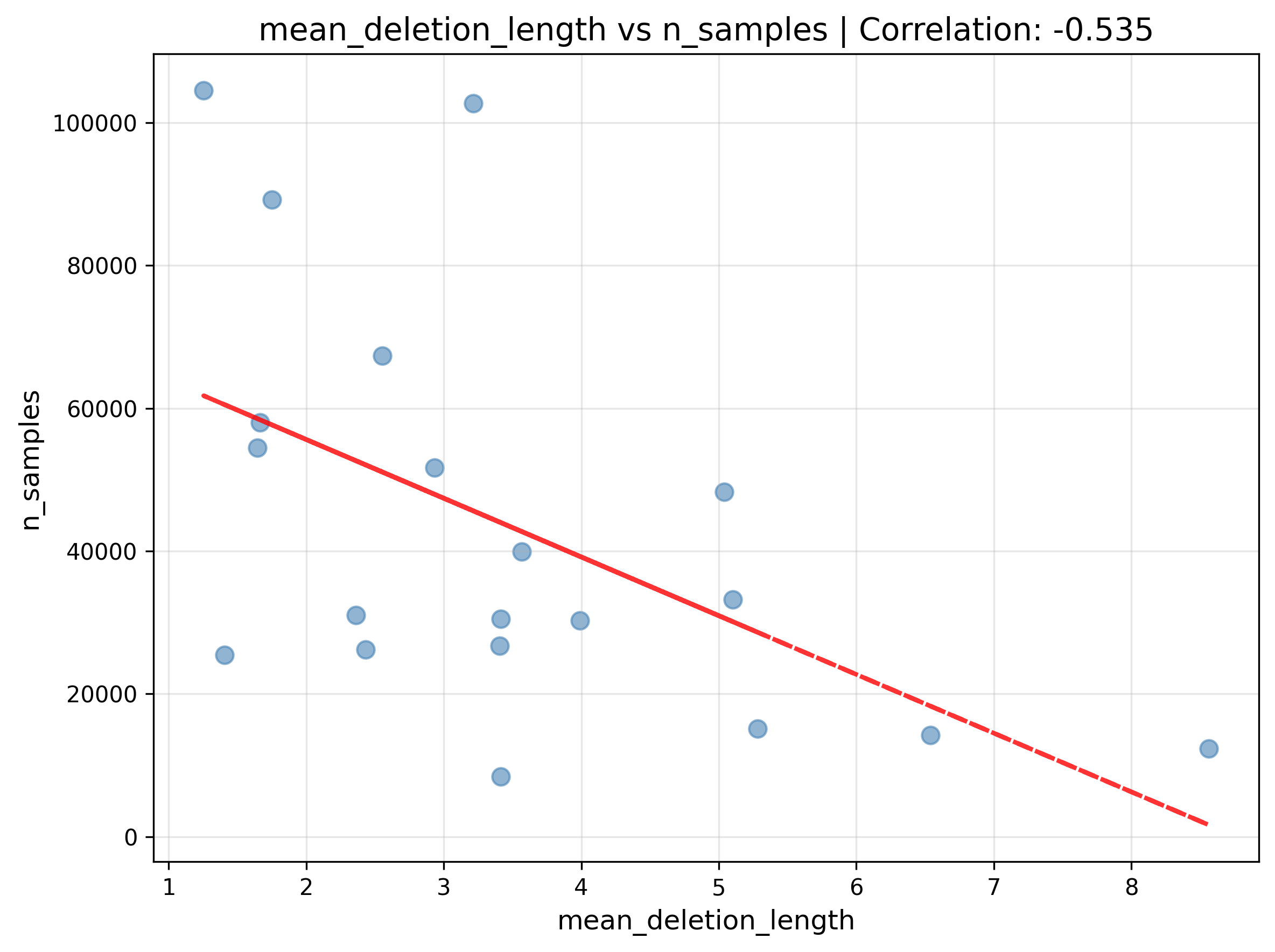
Historian: mean deletion length versus n samples.
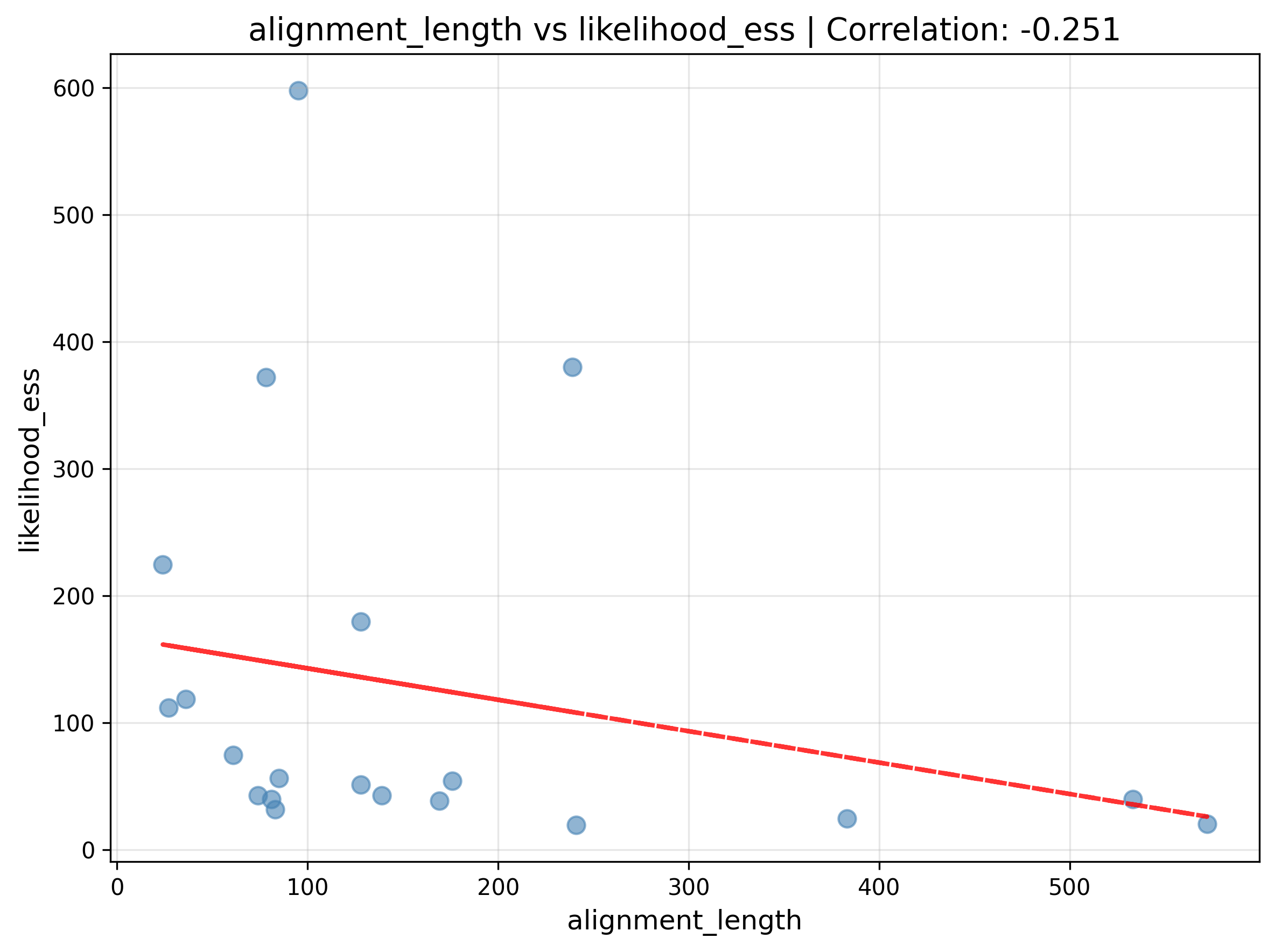
Historian: alignment length versus likelihood ess.