THALis: anatomical-prior model
anatomical prior could take some of the burden off EEG. how much motion comes from the signal vs constraints though? similar question in animation, good rig doing half the work
archived artifact (1e6fa3d): anatomical.py, later reorganized as anatomical_prior.py. The model concerns biomechanical constraints and coupling among hand movements.
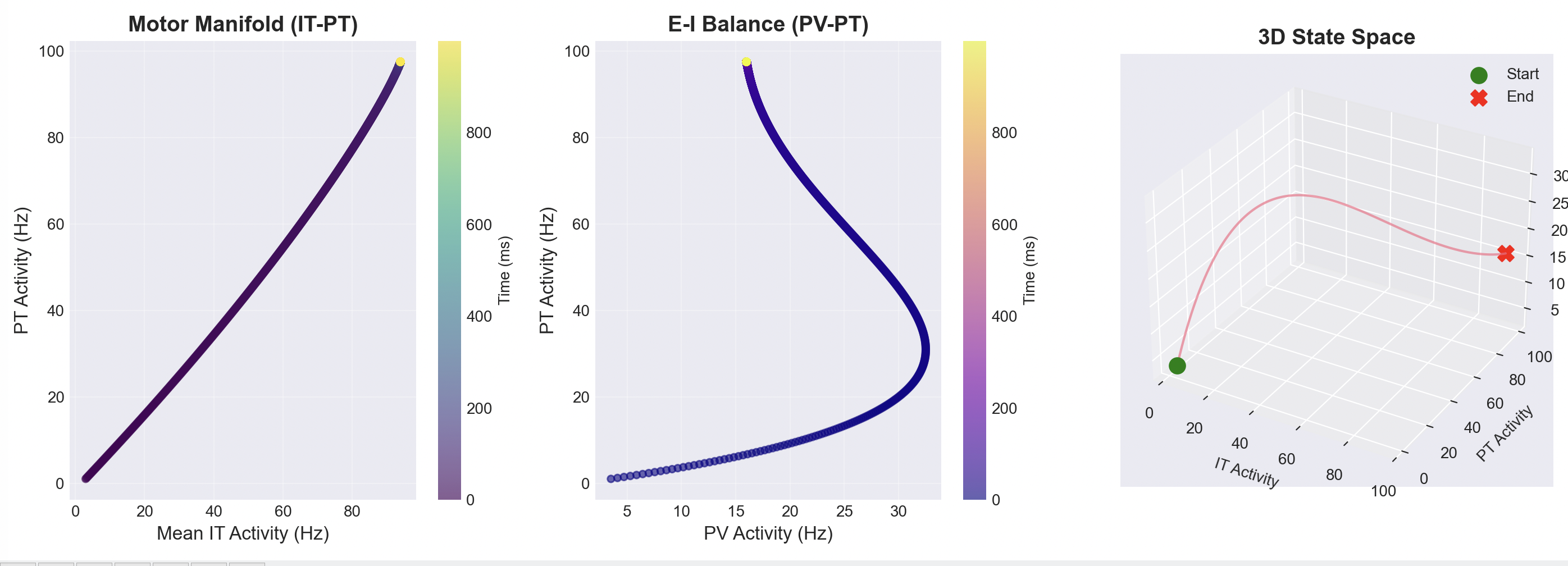
Motor manifold and excitatory–inhibitory balance
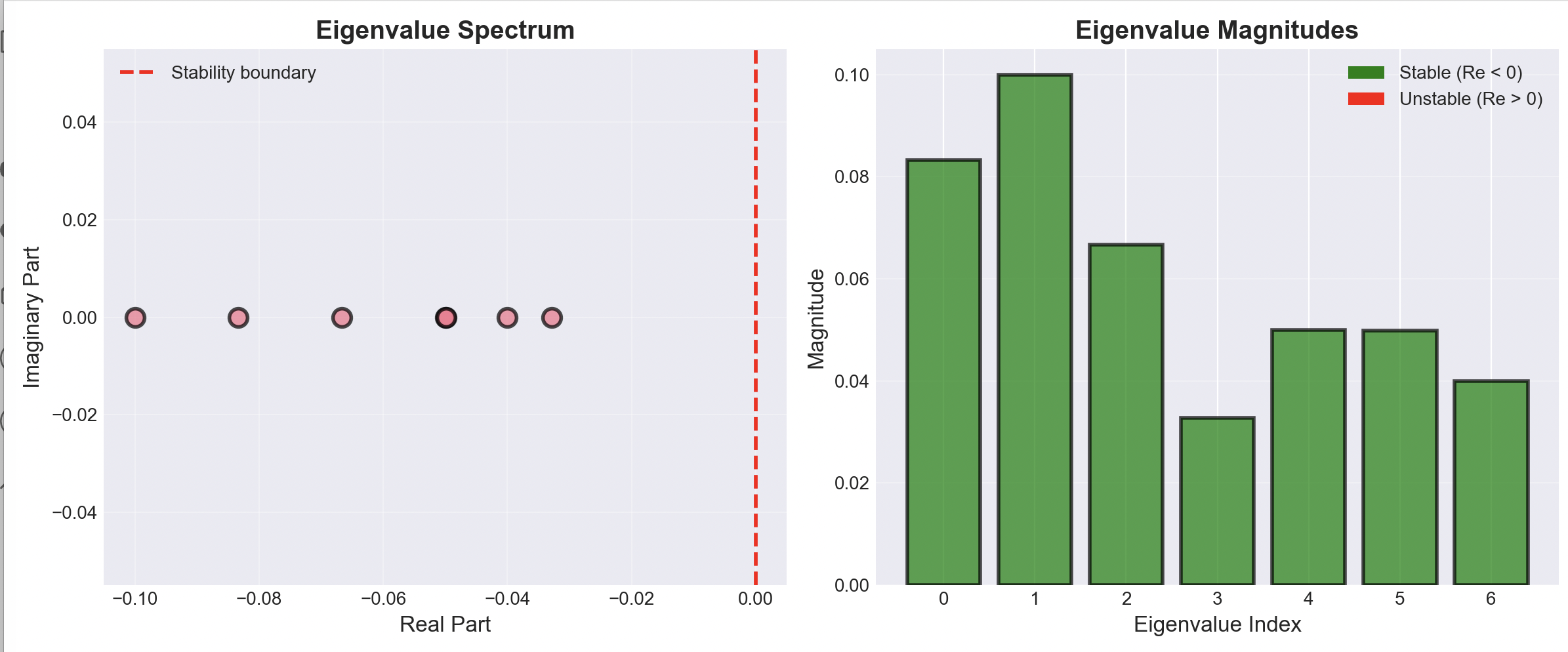
Model eigenvalue spectrum
proposed role: distinguish the decoder's evidence from constraints imposed by the hand model. A prior may restrict improbable/impossible configurations or supply a structured output space, but the archive does not demonstrate that this improves decoding accuracy.
- review questions: what are the state variables and units—joint angles, synergies or fingertip coordinates? Which constraints are hard and which are penalties? Are parameters derived from anatomy, a generic hand asset or a particular user? Keep prior-only predictions separate from EEG-driven predictions in evaluation.
- comparison to recover: a readout with and without the prior under the same split and input features. The later anatomical plots and formal documents can explain the construction; they should not be backdated as results of this initial code addition.
- archived code references:
1e6fa3d.