
Cookie dispenser: test protocol and limits
5 days, repeated fingerprints, count cookies + retries separately
keep the failed attempts too. also '10' in the lock table means no access within the limit, not success on try 10
Daily allowance test: enroll one administrator and five child fingerprints, try each child fingerprint five times, record cookies dispensed, replenish the storage to ten cookies, and repeat over five days. The reported table records one cookie per enrolled child fingerprint per day.
Recognition test: count attempts required for the administrator to enroll a fingerprint and for each child fingerprint to withdraw a cookie; cap the recorded attempt count at ten. The redesign table shows actions completing in one to three attempts. This measures attempts to complete the action, not a full biometric false-accept/false-reject evaluation.
Storage-access test: compare three users acting as children without the lock code against the same users acting as administrators with the code. A value of ten means no access within the allotted attempts. This is a physical-lock test, distinct from fingerprint matching.
Review questions: retain the individual observations, not only the mode; distinguish recognition retries from mechanical jams; add power-cycle cases to assess the clock/counter limitation. The small prototype tests establish only the tested device behavior.
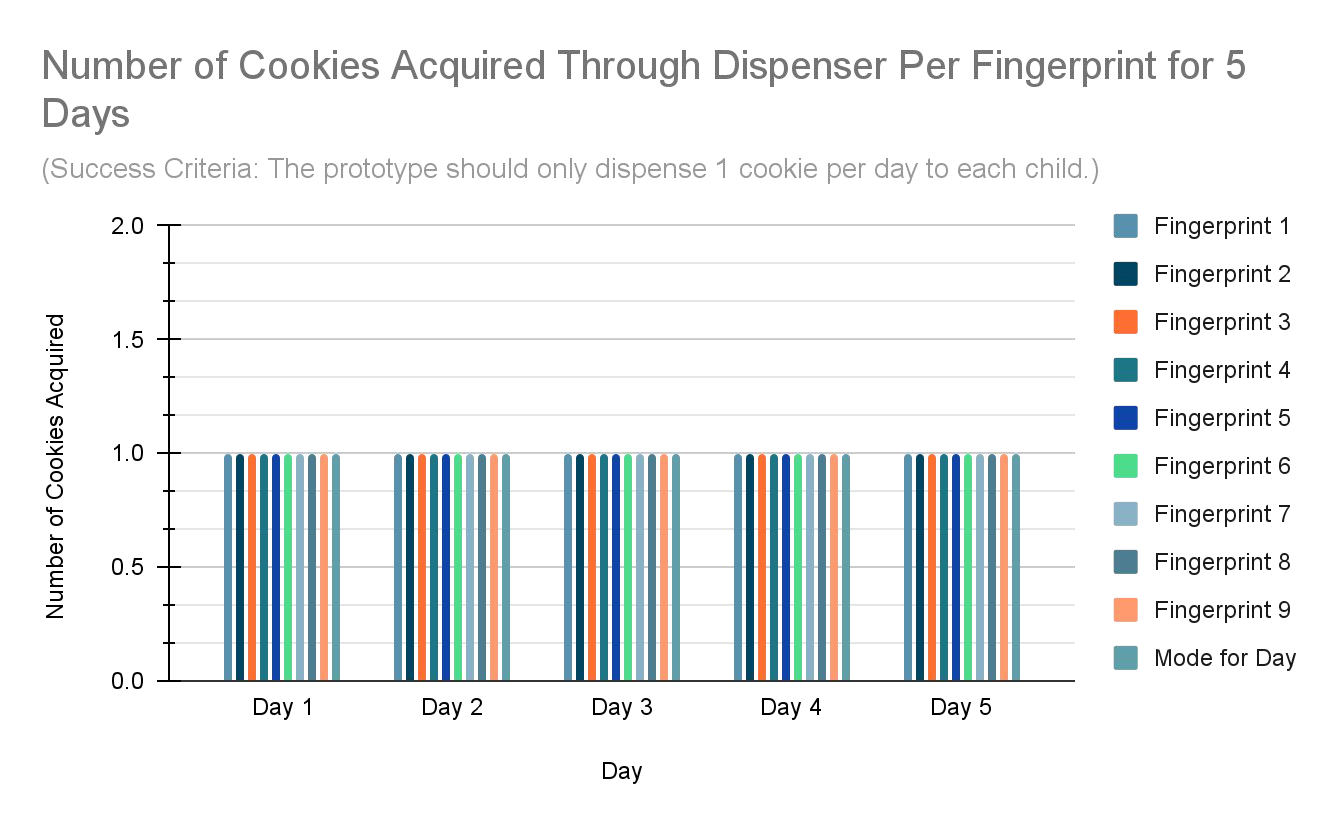
Design 1: cookies dispensed per fingerprint over five days.
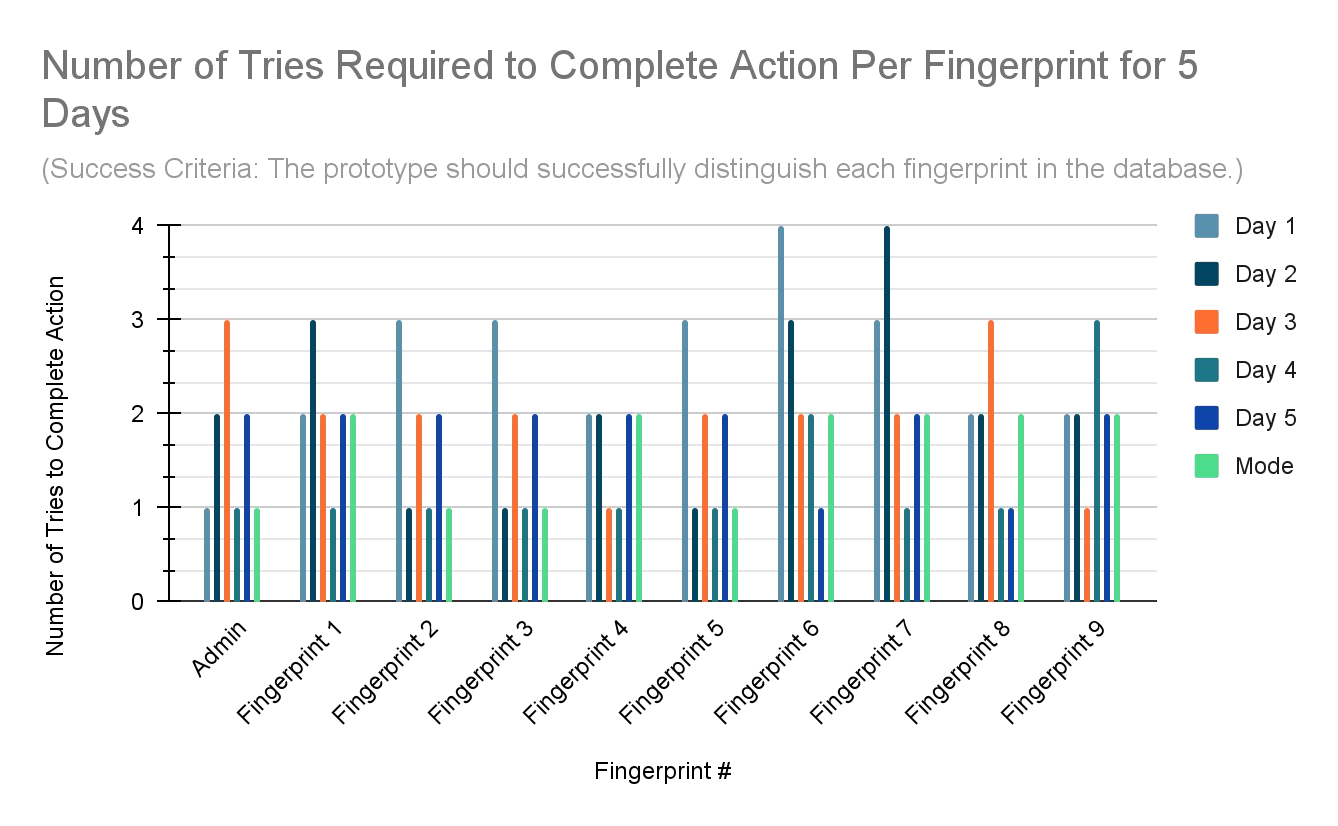
Design 1: fingerprint-action attempt counts over five days.
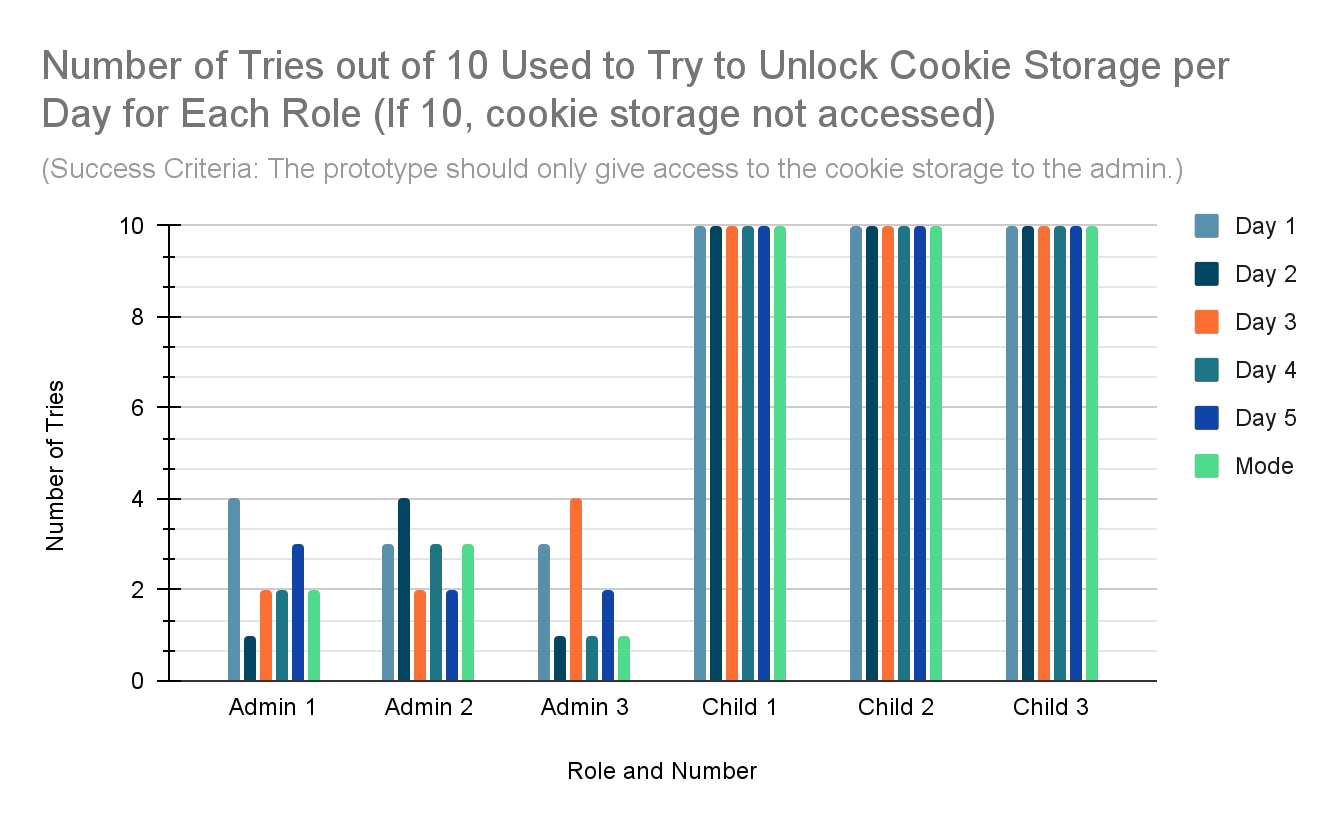
Design 1: storage-access attempts by role.
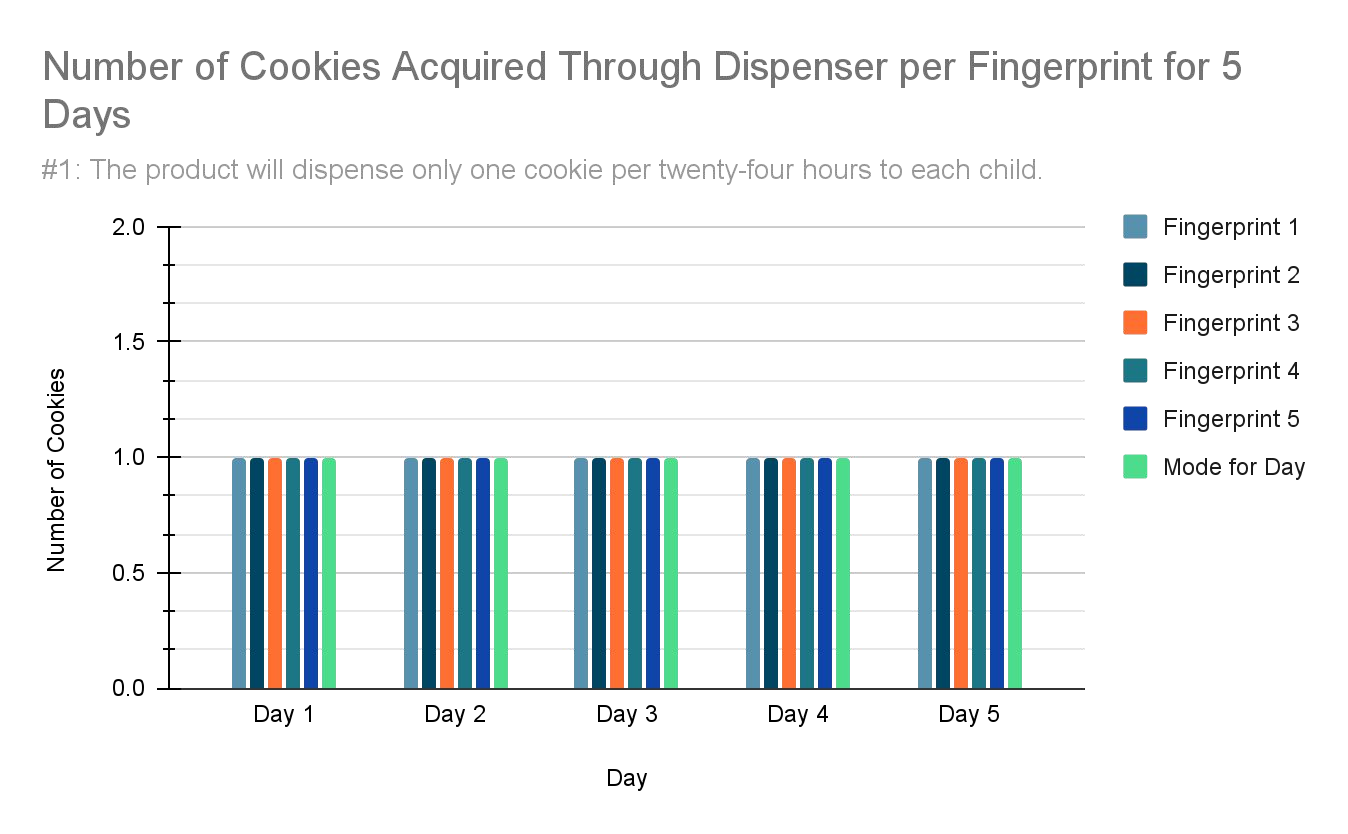
Redesign: cookies dispensed per fingerprint over five days.
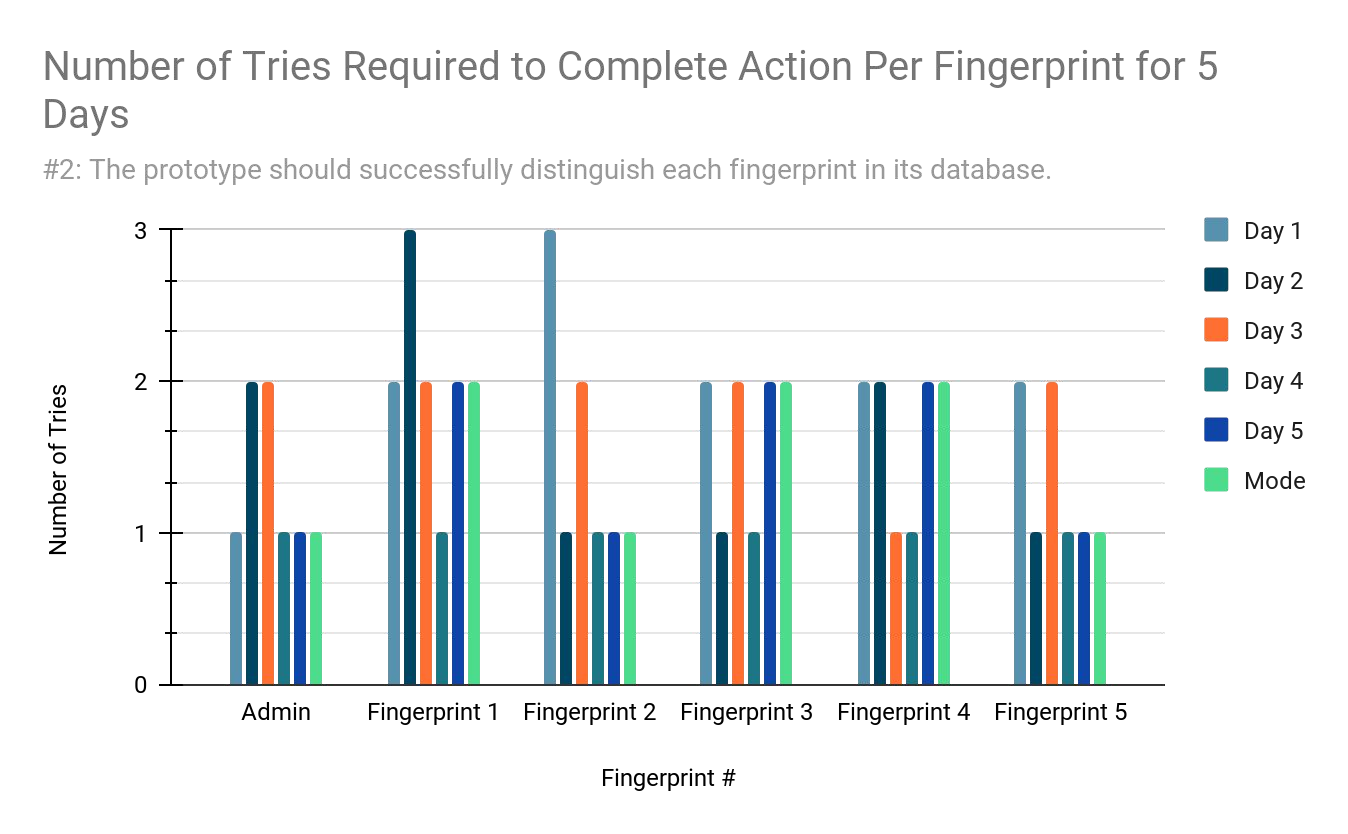
Redesign: fingerprint-action attempt counts over five days.
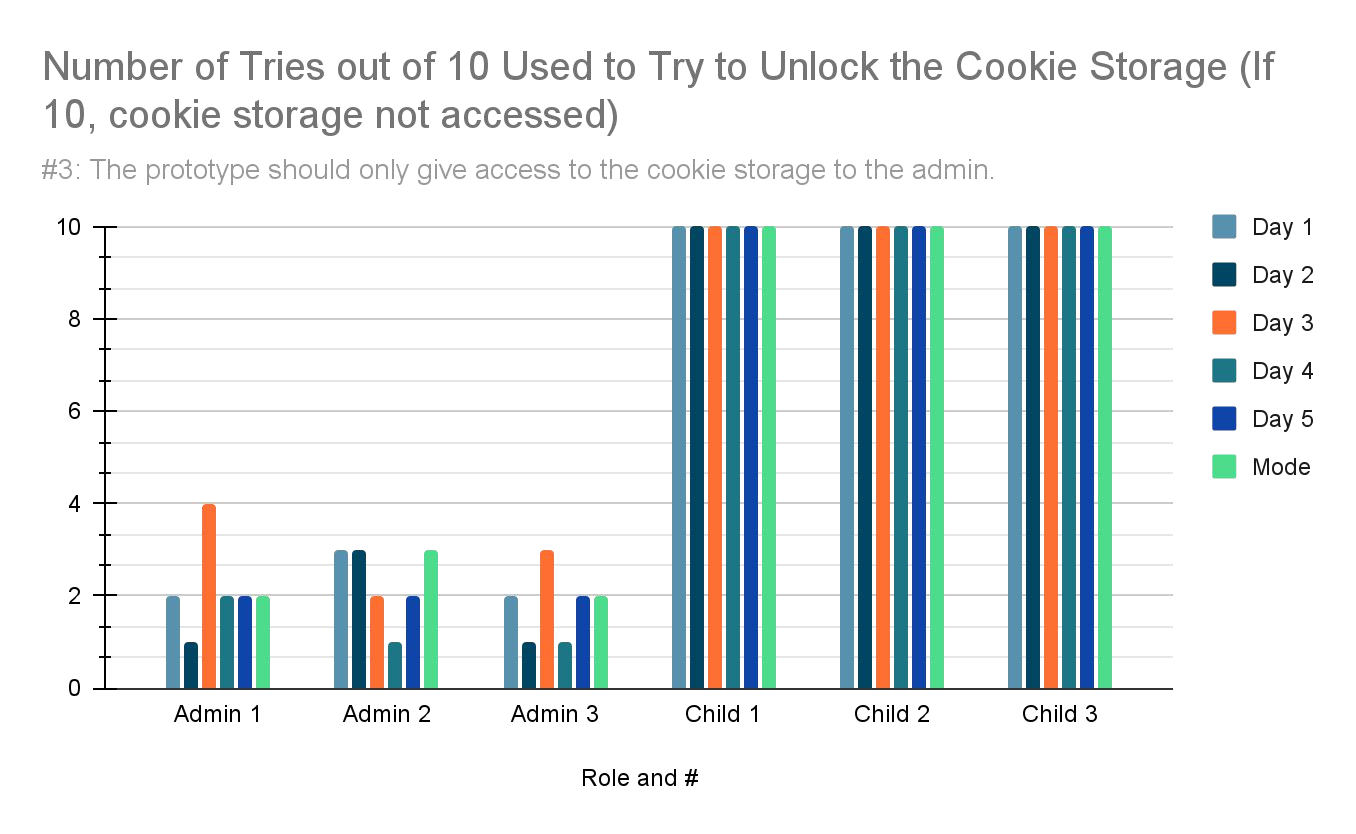
Redesign: storage-access attempts by role.