
Balancerator: center-of-mass model
move the weights → shift COM, motor shouldn't hold the whole load
43.3 kg / 73.07 cm / 50 cm shaft... keep the sketch with this or the angles are going to become nonsense again
mechanical idea: use two moving pendulum weights to shift horizontal center of mass while the wearer inclines. The first demonstration is a cardboard body segment with toothpicks supporting a rear cardboard counterweight.
model reference: COM_x = Σ(m_i x_i) / Σm_i. The later Day 6 calculation uses body mass 43.3 kg, ground-to-waist height 73.07 cm, natural-balance angle 10°, supported angle 15°, and a 50 cm shaft/container length. It arrives at approximately 2.6 kg per pendulum. These are prototype assumptions, not general user settings.
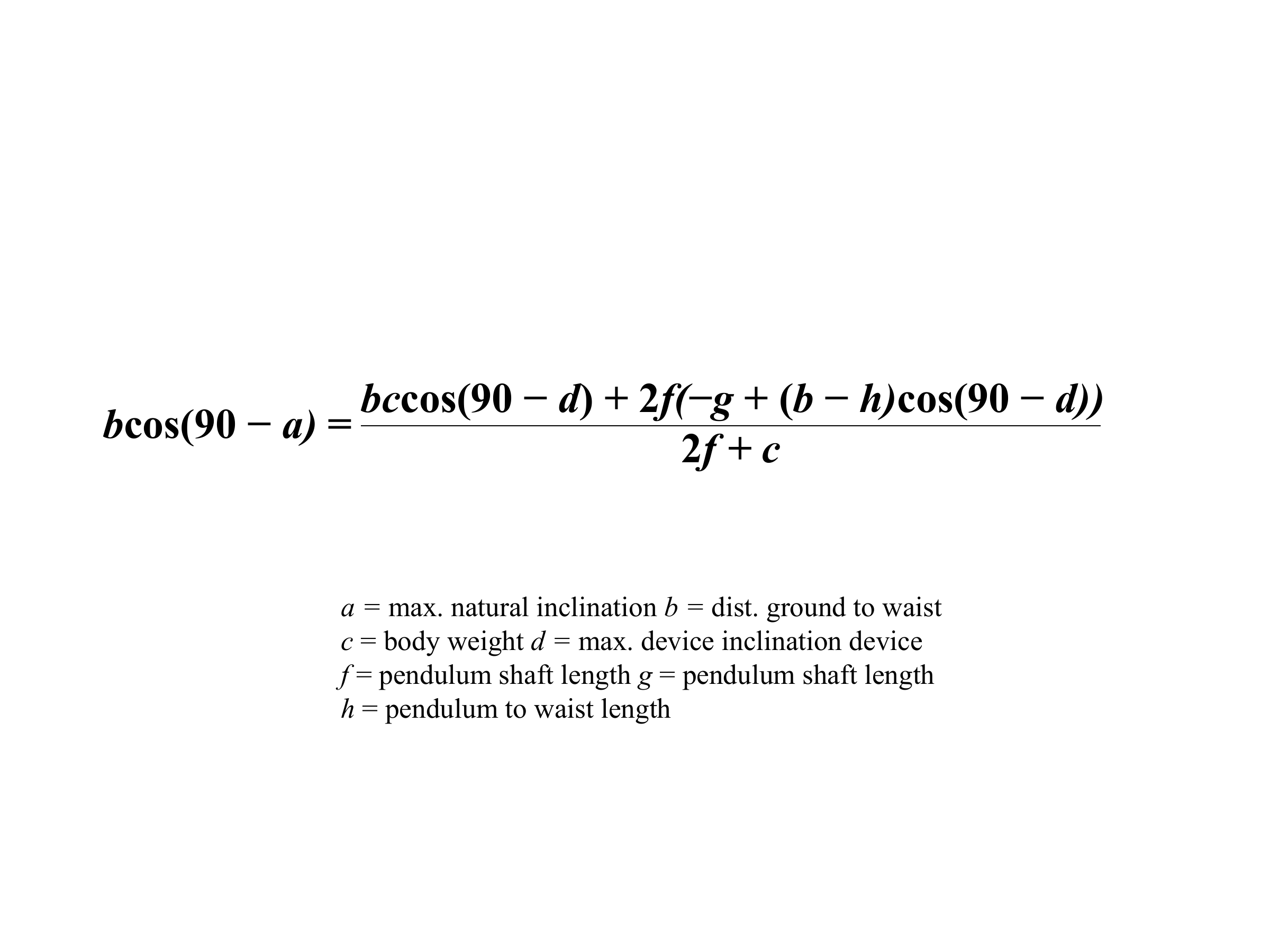
Rearranged center-of-mass equation and variable definitions.
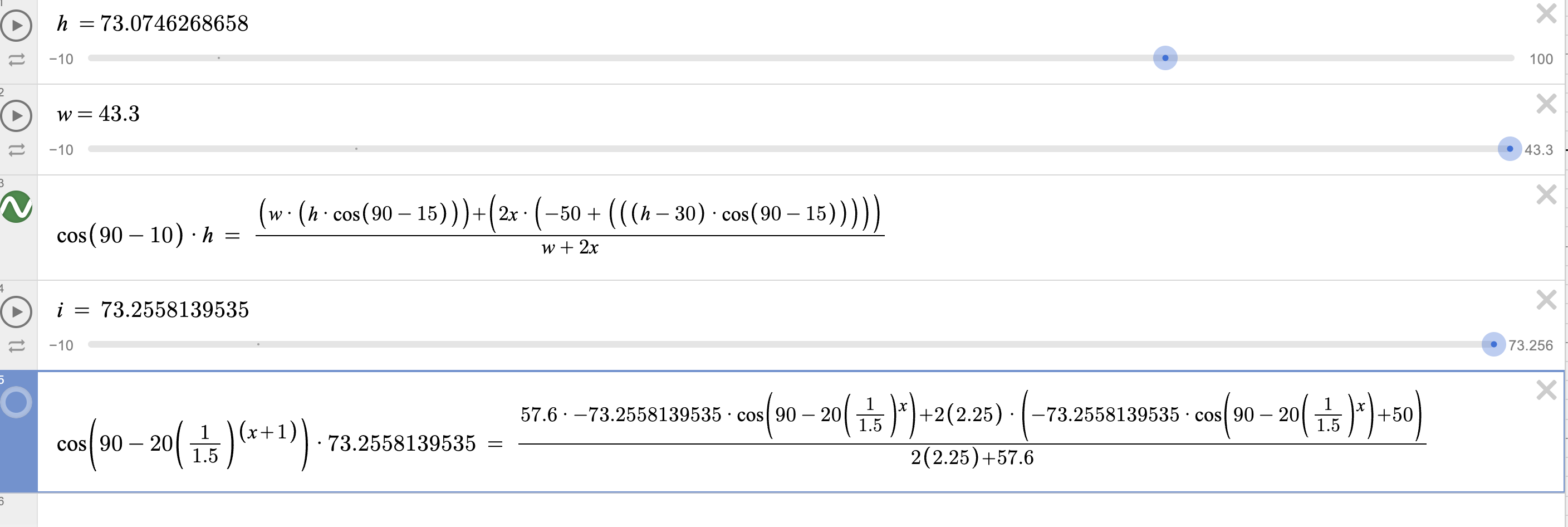
Center-of-mass calculations with 43.3 kg and 57.6 kg examples.
- subsystem split: structure/load support; servo actuation; MPU6050 sensing; Arduino control. The motor should move the counterweight without carrying its full static load.
- review questions: reconcile the 15° calculation with the later 20° design criterion; state the angle convention and pivot location before reusing the algebra. A static center-of-mass calculation alone does not validate dynamic fall prevention.